
Have you ever felt curious about whether the planets might be following a secret code? Each planet takes an oval path around its star, painting a clear picture of cosmic order. Gravity and time guide these beautiful moves, much like a gentle dance in the night sky.
Their journeys tell a story of speed and change that can make us see space in a new way. Today, let's explore how the simple motion of planets can spark a fresh wonder in the night sky.
Planetary Revolution Defined: Understanding Orbital Revolution
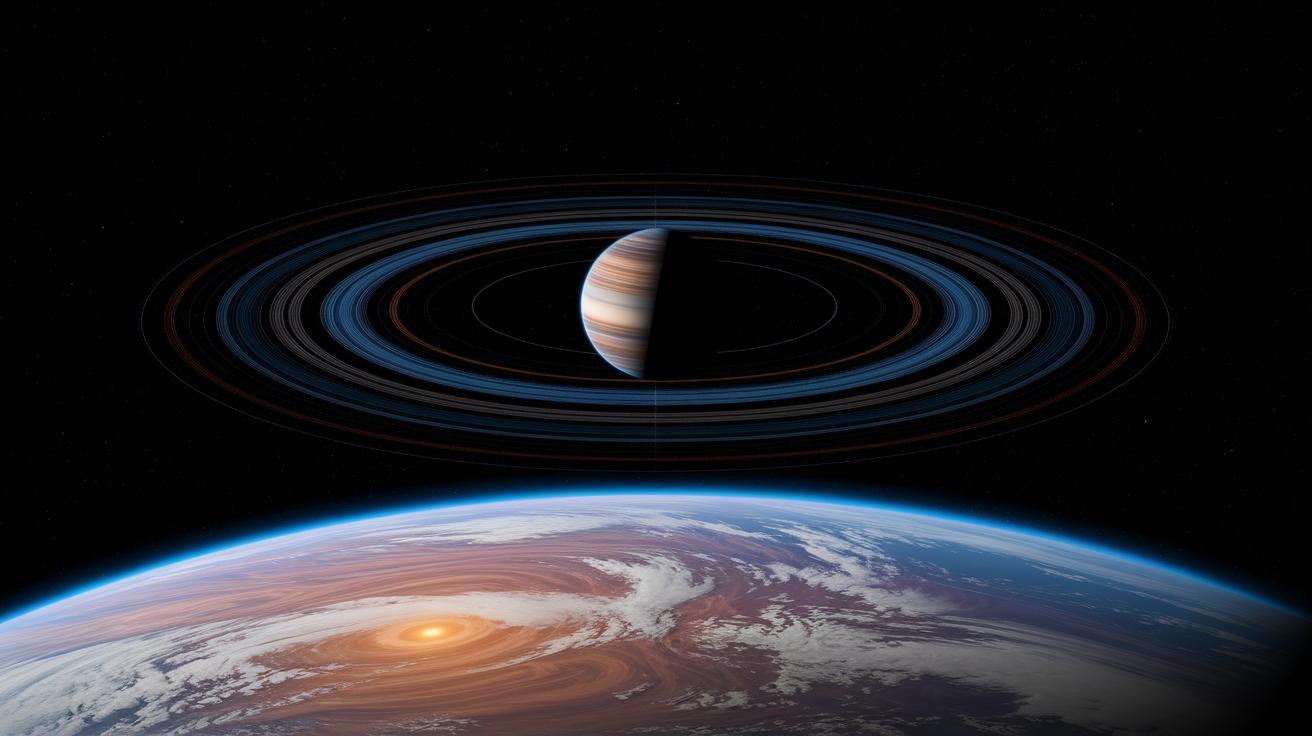
Planetary revolution is simply the journey a planet takes around its star along an oval path. Think of it like drawing an oval around a campfire, the size and shape of the oval matter a lot. Two important parts of this path are the semi-major axis, which is the longest stretch of the oval, and eccentricity, which tells us how squished the oval is.
Newton showed us that gravity pulls a planet toward its star. This pull keeps the planet on its curved, oval path instead of a perfect circle. When a planet gets close to its star, known as perihelion, it speeds up. And when it moves farther away, called aphelion, it slows down. Imagine a skateboarder who picks up speed when going downhill and eases up when climbing, that’s just like how gravity works for planets.
Kepler’s third law gives us an easy way to understand this movement. It says that the square of the time a planet takes to complete its orbit is related to the cube of the semi-major axis. This neat little rule helps us estimate how long a planet's journey around its star will be.
Planetary Revolution: Cosmic Order Inspires

Kepler’s work in the 17th century really shifted how we take in the stars. His bold ideas broke the old, worn-out views and paved the way for the astronomy we know today. He showed us that the universe follows clear, steady rules, much like a gentle dance of the planets under the night sky.
His first law tells us that planetary paths are not perfect circles but oval-shaped loops, with the central star pulling a bit harder on one side. In simple terms, each orbit is like a stretched circle, giving every planet a unique path as it moves closer or farther from its star.
The second law explains that the line from a planet to its star covers the same area in the same amount of time, no matter where the planet is along its path. This means that when a planet gets closer to its star, it speeds up, and when it moves farther away, it slows down. It’s nature’s way of keeping things balanced yet always in motion.
Kepler’s third law ties a planet’s travel time to how far it is from its star. With his equation, if you know the size of the orbit, you can figure out how long it takes for a planet to complete one full loop. This simple yet powerful idea captures the steady pulse of our cosmic clock.
Planetary Revolution vs. Rotation: A Comparative Study

Rotation is how a planet spins around its own axis, picture a merry-go-round twirling in place. Meanwhile, revolution is the planet’s journey around its star, much like that same merry-go-round slowly circling a glowing center.
On Earth, this orbital dance takes about 365.256 days, which is the time it takes to complete one full trip around the Sun. In contrast, our planet spins every roughly 23 hours and 56 minutes, creating the cycle of day and night. That slight tilt of 23.5° gently changes how the Sun warms different parts of the Earth, giving us our seasons.
These two motions follow their own natural rhythms. Rotation comes from the planet’s original spin, while revolution is ruled by gravity, guiding the planet along its path. It’s all part of the cosmic dance that keeps our skies in motion.
Earth’s Planetary Revolution: Annual Solar Circuit and Climate Impact

Our Earth takes a graceful trip around the Sun, finishing one full circuit in about 365.256 days. Picture its journey as a gentle space dance that isn’t a perfect circle, it has a semi-major axis of 1 AU and a slight twist, or eccentricity, of 0.0167. Along the way, Earth moves at an average speed of 29.78 km/s.
| Parameter | Value | Unit |
|---|---|---|
| Orbital period | 365.256 | Days |
| Semi-major axis | 1 | AU |
| Eccentricity | 0.0167 | – |
| Average speed | 29.78 | km/s |
When Earth gets closer to the Sun at a point called perihelion, it picks up speed. And when it drifts to its farthest point, known as aphelion, it slows down a bit. This gentle speed change, working together with the tilt of our planet, helps shape the rhythm of our seasons.
- Tiny shifts in the Sun's warmth affect local temperatures.
- Changes in daylight hours bring about the seasonal feel.
- The nearly circular orbit paired with Earth’s tilt keeps the seasonal changes mild.
Planetary Revolution Modeling: Simulation and Visualization
Simulations give us a friendly look at how things move in space. They let us see a planet's journey, showing us how it speeds up when it gets close to a star and then slows down as it goes away. This makes it much easier for both learning and teaching about space.
In these computer models, we start by adding simple details like a planet’s starting spot, how fast and in which direction it moves, and some key gravity numbers. Then, using steps of time, the model uses methods, such as the Runge-Kutta algorithm, to solve equations that match how gravity pulls. The results come out as lively orbit animations, area-sweep images, and neat 3D paths. By using this approach, we can clearly see how forces work together to guide a planet on its journey.
Many popular tools help bring these ideas to life. For instance, N-body simulators let you play with moving orbits, Celestia offers a stunning visual trip through space, and NASA’s Eyes delivers real-time animations that pull you right into the cosmic dance.
Historical Evolution of Planetary Revolution Models
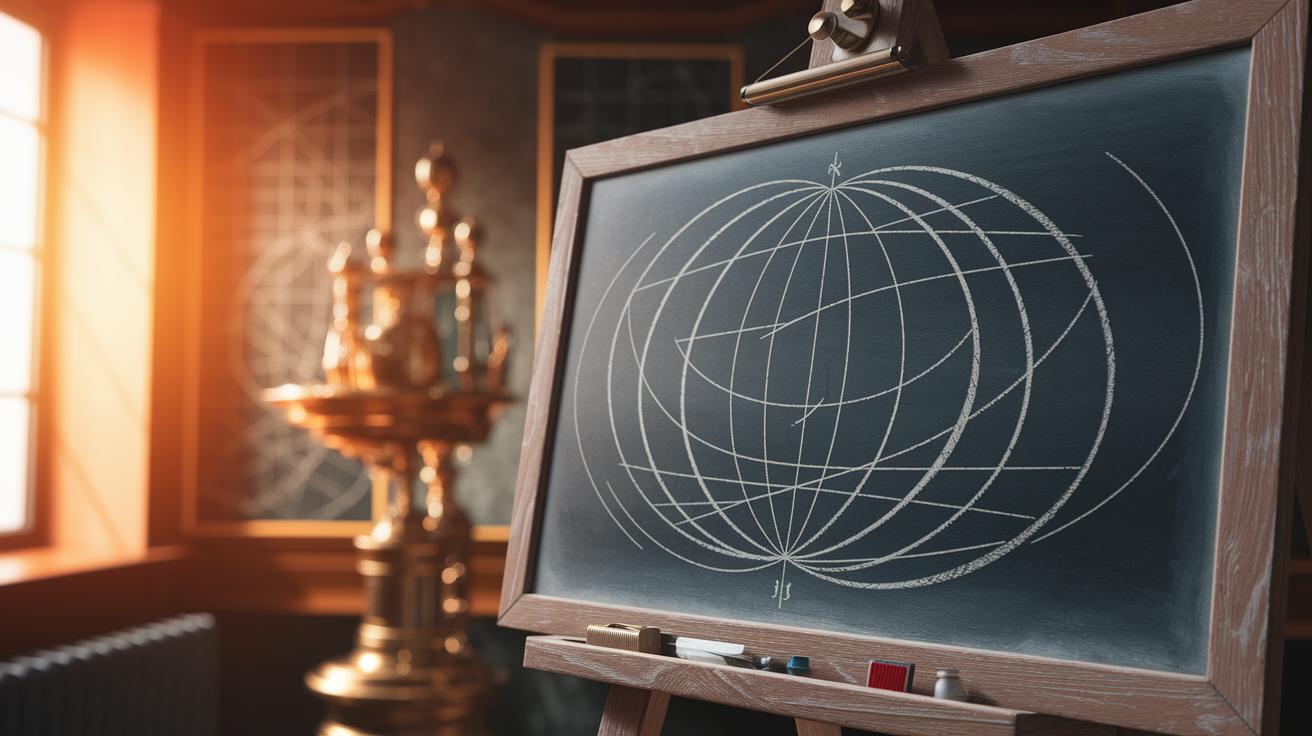
Long ago, ancient astronomers believed that our home, Earth, sat at the center of the universe. They used a system called the geocentric model, popular around the 2nd century AD, which relied on epicycles, tiny circles within circles, to explain the puzzling dance of the planets.
Then, in 1543, Copernicus offered a fresh idea that flipped the script by placing the Sun at the center. Imagine the surprise of everyone when a simple idea began to change our view of the vast cosmos! In the late 1500s, Tycho Brahe, known for his careful and detailed observations of the sky, gathered data that made many question the old geocentric view. His smart measurements paved the way for a deeper, more accurate understanding of the universe.
Between 1609 and 1619, Johannes Kepler stepped in with his groundbreaking laws. Instead of planets moving in perfect circles, he showed that they travel in graceful, oval paths, with the Sun shining from one of the foci. His work helped clear up the cloudy mysteries of the stars.
Then came Sir Isaac Newton in 1687 with his famous work, Principia. He connected gravity with motion, explaining how and why the planets follow the paths that Kepler had discovered. Newton revealed that a force, which gets weaker with distance, guides the celestial dance. His ideas marked a major milestone on our journey to truly understand the wonders of space.
Advanced Mechanics of Planetary Revolution and Orbital Dynamics

Gravity is the force that keeps the planets moving in their orbits around the sun. Newton’s idea tells us that every planet feels a gentle pull based on the masses involved and the distance between them. This pull acts like an unseen guide, keeping each planet in its steady path.
Planetary energy also plays a key role. In simple terms, this energy is a balance between the sun's pull and the planet's own motion. Think of it as a quiet tug that helps the planet follow a smooth, curved journey through space, much like a spinning top circling a fixed point.
Another factor is how stretched out a planet’s orbit is, called eccentricity. This quality even changes the planet’s speed along its path. Sometimes, nearby celestial bodies give a slight nudge, leading to subtle shifts such as a slow turning of the orbit or a repeated rhythmic pattern.
Here are a few key factors that shape this cosmic dance:
- Central gravity
- Orbital eccentricity
- Axial tilt coupling
- Multi-body perturbations
- Resonance effects
Each of these elements works together to create the graceful and predictable motion of the planets. Isn’t it wonderful how the universe moves with such gentle precision?
Final Words
In the action, we explored the basics of a planet’s orbital path, unpacked Kepler’s laws, and weighed how rotation measures up to revolution. We even saw how Earth’s own solar circuit shapes our climate. Each section shone a light on the science behind cosmic motions. The discussion deepened our understanding of the planetary revolution and its role in everyday experience. May these insights spark a renewed sense of wonder as you continue feeling the pull of cosmic forces every day.
FAQ
What is a planetary revolution?
A planetary revolution refers to the orbit a planet makes around its star following an elliptical path. This motion is governed by gravity and the orbit’s shape and size.
How do planets revolve around the Sun?
Planets revolve around the Sun by following elliptical orbits under the pull of gravity. Their paths are defined by principles that ensure equal areas are swept in equal time periods.
What is the difference between rotation and revolution?
Rotation is the spin of a planet on its own axis, creating day and night, while revolution is the orbit around the Sun, which sets the length of a year and influences seasons.
What are the Earth’s revolution period and rotation speed?
Earth completes its revolution around the Sun in about 365.256 days and spins at roughly 1,670 km/h at the equator, with its orbital speed averaging approximately 29.78 km/s.
What is the revolution of the eight planets?
Each planet has a unique revolution period; while inner planets complete orbits in shorter times, outer planets like Saturn take nearly 30 years to orbit the Sun.
Which planet takes around 30 years to revolve around the Sun?
Saturn takes about 29.5 to 30 years to complete one revolution around the Sun, reflecting its distant, expansive orbit under the steady pull of solar gravity.
At what time will planets align in 2025?
Predictions of planetary alignments in 2025 are speculative, as these events depend on complex gravitational interactions and precise orbital timing rather than a fixed schedule.
Where can I find a chart comparing planet rotation and revolution?
A rotation and revolution chart visually differentiates how planets spin versus how they orbit the Sun. Such charts are available in many astronomy resources and educational platforms for quick comparison.