
Have you ever wondered if gravity’s gentle pull guides the paths our planets take in the night sky? Imagine a soft dance where each planet follows its own smooth curve, nudged along by natural forces. It’s like watching a blend of nature’s power and calm precision come together in a quiet, cosmic waltz. In this post, we explore how these simple orbits remind us that even the smallest moves in space can light up our curiosity and leave us in awe.
planetary paths radiate cosmic wonder

Planets travel around the Sun in a steady, predictable way. When you look from above, they move in a counter-clockwise dance. The Sun’s gravity gently pulls even the fastest movers, guiding them into smooth, curved paths. Imagine riding a bike while someone softly tugs your shoulder to keep you on track.
Each planet follows a path shaped by its own momentum and the pull from the Sun. These two forces mix together like a race car turning a bend, where speed and the curve of the road work in harmony to keep the car on track.
Billions of years ago, a swirling cloud of dust collapsed under its own weight to form our star. Around this early Sun, the planets began to gather and orbit. Today, the same natural forces give rise to these graceful, reliable paths in space.
Every orbit tells a story of nature’s balance. It reminds us that even the simplest movements in the cosmos are filled with wonder and cosmic magic.
Elliptical Tracks and Circular Loops in Planetary Paths

Planets dance through space along curved paths that are more like gentle ovals than perfect circles. Their routes are ellipses with the Sun placed off to one side, much like a hidden spotlight. Imagine a car cruising on a softly curved racetrack. Even if it feels like a perfect circle at a glance, it's really moving along a slightly offset oval.
Kepler’s first law shows that every orbit follows an elliptical shape. His second law adds that when you draw a line from the Sun to a planet, it sweeps out the same area over equal periods of time. This helps explain why a planet’s speed changes as it gets a little closer or farther from the Sun.
Now, think about comets. Their paths are much more wild and stretched out, with unpredictable turns. A comet might flash across the sky in a unique, erratic arc, quite different from the smooth trails of most planets. This contrast reminds us that while some celestial bodies follow neat, nearly circular routes, others roam with a touch of cosmic unpredictability.
Gravitational Dynamics Shaping Planetary Paths
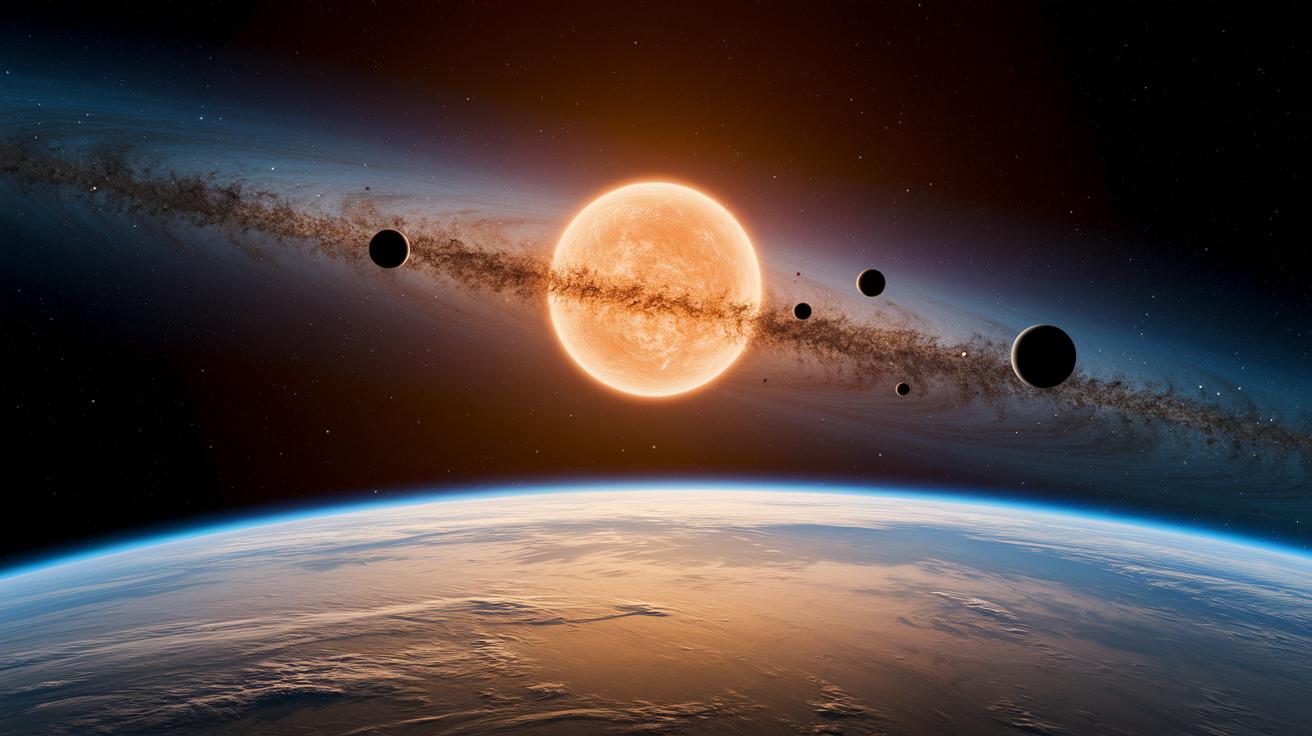
Planets and the Sun formed from a giant cloud of dust. Gravity pulled most of the heavy stuff together into a bright, almost still Sun, while the lighter materials began to circle around it like dancers around a glowing spotlight.
Today, gravity still acts like a gentle guide. It pulls the planets toward the Sun, balancing out the push they get from moving forward. Think of it like tossing a ball just right so it curves around a post instead of dropping straight down. Gravity is that quiet helper keeping everything in its proper place.
Even tiny nudges between the planets matter. When one planet gets close to another, a small gravitational tug can slowly shift its path. In our solar system, these little tugs can change the speed of a planet just a bit, showing how perfectly balanced and delicate our cosmic dance really is.
Retrograde Motions and Apparent Loops in Planetary Paths

Have you ever looked up on a clear night and seen a planet seeming to move backwards? Don't worry; it's not really reversing its orbit around the Sun. We only see that because Earth is speeding ahead, which makes the planet look like it's taking a few steps back.
Mercury and Venus, the planets closest to the Sun, often put on this looping show. Mercury seems to reverse its direction about 3 or 4 times a year, each episode lasting around 21 days. Venus does a similar dance roughly every 1.5 years, with its retrograde period going on for about 41 days. When you watch, these circular patterns in the sky create a charming, almost magical display.
Planets farther out, like Mars, Jupiter, Saturn, Uranus, and Neptune, also seem to loop backward sometimes. Their retrograde motion happens when they align roughly opposite the Sun from our point of view here on Earth. For instance, Mars appears to reverse every couple of years for about 72 days, while Jupiter’s backward journey happens every 399 days and lasts roughly 121 days. Saturn offers a reverse loop every 378 days, stretching out for around 138 days. Even Uranus and Neptune show retrograde periods that last about 151 and 158 days respectively. All of this reminds us that the way planets move is all about the balance between their momentum and the pull of the Sun.
In truth, these looping paths are simply how our changing view from Earth gives us a peek into a celestial ballet. It's a graceful dance in the sky that invites us to marvel at the beauty of planetary motion.
Historical Conceptions of Planetary Paths
Long ago, people used magical ideas to explain the sky. They believed that the heavens were made of shiny, crystal spheres and that unseen forces, like whispering souls, guided the planets. Imagine hearing, "The stars move on secret crystal tracks," a thought that wrapped wonder around the unknown.
In early times, great thinkers like Aristotle and Ptolemy put Earth right in the center of everything. They explained the moves of the stars with circles and small loops, much like a clockwork of imagined gears. This clever idea fit what they saw, even if it wasn’t the true picture of the cosmos.
Then, a new way of looking at the stars arrived with Copernicus and Kepler. Kepler, in 1609, showed that planets travel in oval paths. This shift turned the mystical story into a precise dance of planets circling a bright, central Sun.
Charting and Tracking Planetary Paths with Ephemeris Data
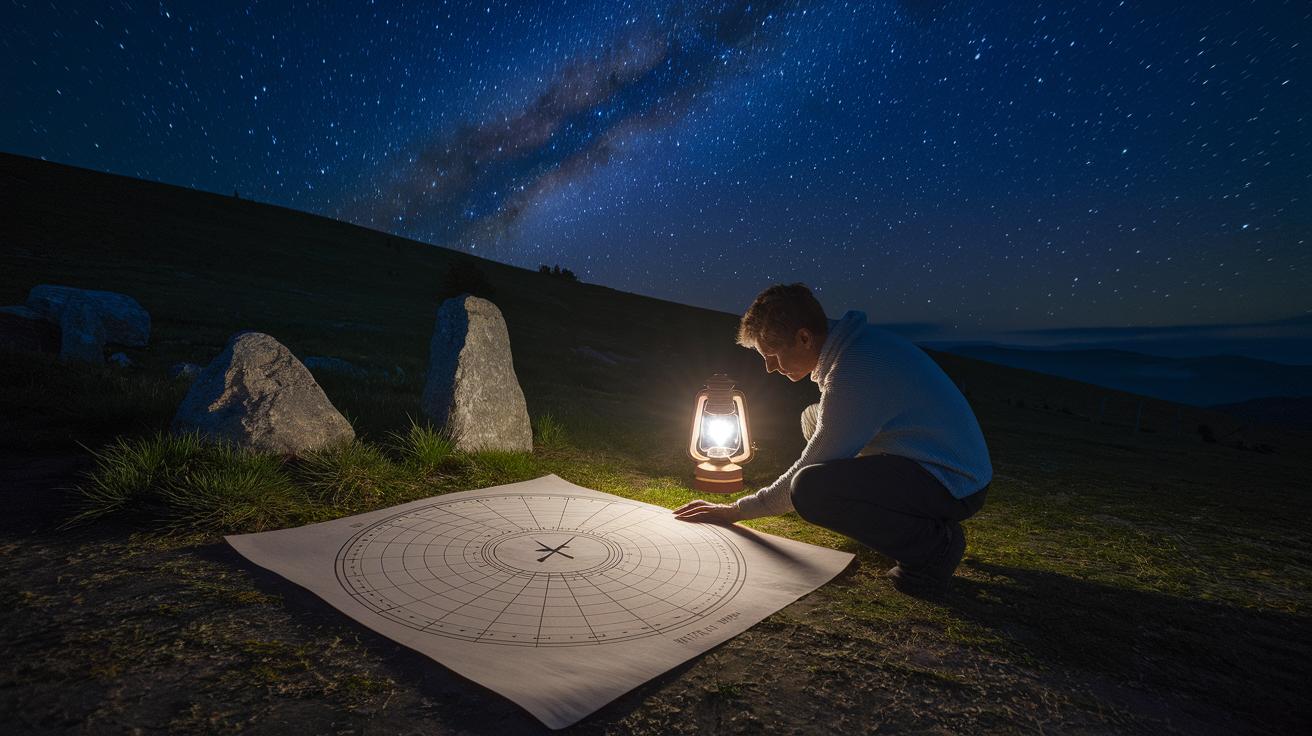
Star charts let you capture the magic of the night sky. Imagine a chart where every 2 cm stands for one degree on the sky's dome, a simple way to map out the stars around us. For example, if you lay a ruler on the chart, a 0.5-degree gap between stars shows up as 1 cm. These charts, measuring about 12.7° by 9.5° and printed at 100 dpi, help you see even the gentle shimmer of stars as faint as magnitude 8.5.
In many early sky-watching sessions, Jupiter and Saturn shine the brightest. Their spots are marked with little crosses, and a north celestial pole arrow tells you which way is up. This easy-to-read guide helps you find these giant planets quickly against the vast sky.
Try these steps to keep track of the planets’ paths:
- First, note the date and the position using your ephemeris data, which is like a detailed sky roadmap.
- Next, compare your observations with the chart’s scale to see how far apart the stars and planets lie.
- Finally, write down any small changes that might come from gravity’s pull or changing weather conditions.
All your observations come together in a tracking report, a kind of diary of the night sky. Sometimes, you’ll have report deadlines like May 6th, but these may shift if the weather changes. By using accurate ephemeris data, you build a personal record that moves as smoothly as the planets overhead. This hands-on way of charting the heavens turns raw numbers into a vivid glimpse of cosmic wonder.
Simulation and Modeling of Planetary Paths for Predictive Analysis
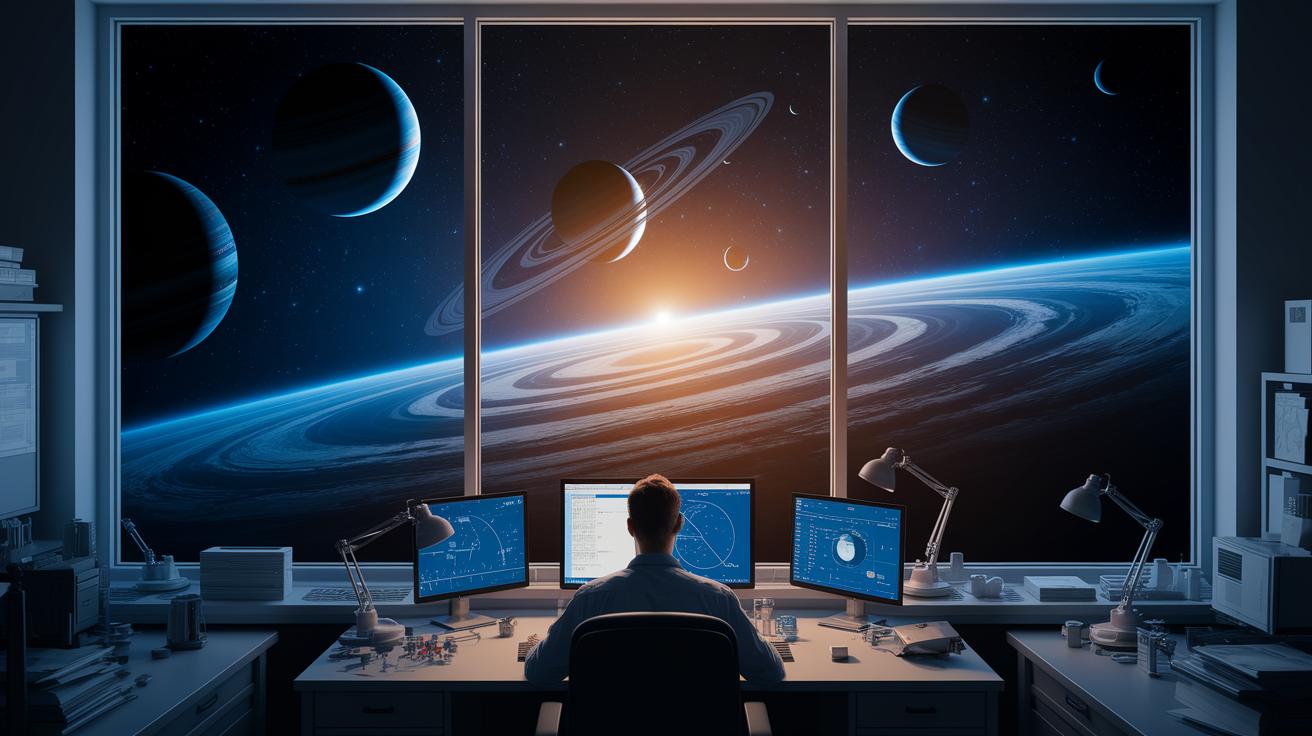
Modern simulation software shows planetary paths in a way that feels like watching a beautiful cosmic movie. These tools mix our Earth view with exact orbit sizes and the pull of gravity. Think of it like a computer program that figures out each planet's spot in real time using careful math and old ideas about circular motion. It is much like watching a dance, where a planet smoothly changes its step with a little gravitational nudge.
Astronomers use these techniques to spot tiny changes in a planet's orbit and to guess how these paths change over long periods. The clever math inside these models helps track when planets move in front of stars and predicts how their paths will curve. By thinking about even the smallest effects, these tools reveal the gentle balance that guides each orbit. Observers can compare these digital results with past sky views to make even better predictions, turning plain numbers into a lively picture of our Solar System's cosmic rhythm.
Final Words
In action from the basics of orbital motion to modern simulation tools, we pictured how gravitational pulls, retrograde motions, and classic star charts shape our cosmic view. Our discussion broke down elliptical loops, old models, and practical ways to track the night sky.
Each point shows that everyday cosmic signs reflect our own rhythm. Embrace the guidance from planetary paths and feel encouraged as you move forward under the shining lights of the cosmos.