
Have you ever wondered why some space objects get the title of planet while others just blend into the background? Scientists use three simple tests to decide. They check if an object orbits the Sun, if its own pull shapes it nearly into a perfect circle, and if it’s clear of other cosmic clutter.
It’s like sorting pieces in a big puzzle. These easy-to-follow rules help us spot true worlds from stray space debris. And in doing so, they invite you to look at our solar system with fresh eyes and a renewed sense of wonder about the science behind it.
Defining Planetary Classification Criteria

The International Astronomical Union, or IAU, set three simple rules to decide if something is a planet. First, it must orbit the Sun. Second, it has to mold itself into a nearly round shape because of its own gravity. And third, it needs to sweep its path clear of other space debris. These guidelines help scientists tell planets apart from asteroids and dwarf planets.
How heavy something is and what it's made of plays a big role in getting that perfect round shape. Typically, an object has to weigh more than about 10^22 kilograms so that its gravity can pull it into a ball form. That round shape shows that gravity won over the internal forces fighting to change its form. Size and inner workings can also affect how evenly an object forms, giving us clues to compare different worlds.
Another key test is what we call orbital clearing. This means the object must have pushed away most of the leftover bits from when it formed. For example, Pluto doesn’t quite make the cut because it still shares its orbital zone with lots of icy chunks. By checking these conditions, astronomers build a clear map of our solar system and know which bodies truly deserve the title of planet.
Major Categories in Planetary Classification

Scientists group planets into different classes so it's easier to compare them. When you look at these groups, you can spot clear differences and similarities that spark our wonder about the universe. It helps researchers zero in on special traits and learn how planets form and change over time.
- Terrestrial planets: These are rocky worlds with a solid surface, mostly found in the inner parts of our Solar System.
- Gas giants: Big planets covered in thick layers of hydrogen and helium that fuel wild weather patterns.
- Ice giants: Planets with layers rich in water, ammonia, and methane that give them unique, icy exteriors.
- Dwarf planets: Smaller bodies that circle the Sun but haven’t cleared out all the space around their orbits.
There is also a wider catalog that goes beyond these basic classes, listing around 70 different types of planets. This list includes intriguing kinds like ammonia clouds gas giants and carbon planets. Ammonia clouds gas giants have cool, muted cloud layers that differ from the usual gas giants, while carbon planets are noted for high carbon levels that shape their surfaces. Other examples include barren planets with almost no atmosphere, as well as mysterious brown dwarfs and chlorine planets that challenge our common ideas about how planets are made.
By exploring both the main groups and these special types, astronomers gain deeper insights into the many faces of planets. This layered view shows how various environmental conditions and chemical ingredients shape planetary development, ultimately broadening our understanding of how these amazing worlds come to be and stick around.
Planetary Classification: Spark Scientific Curiosity
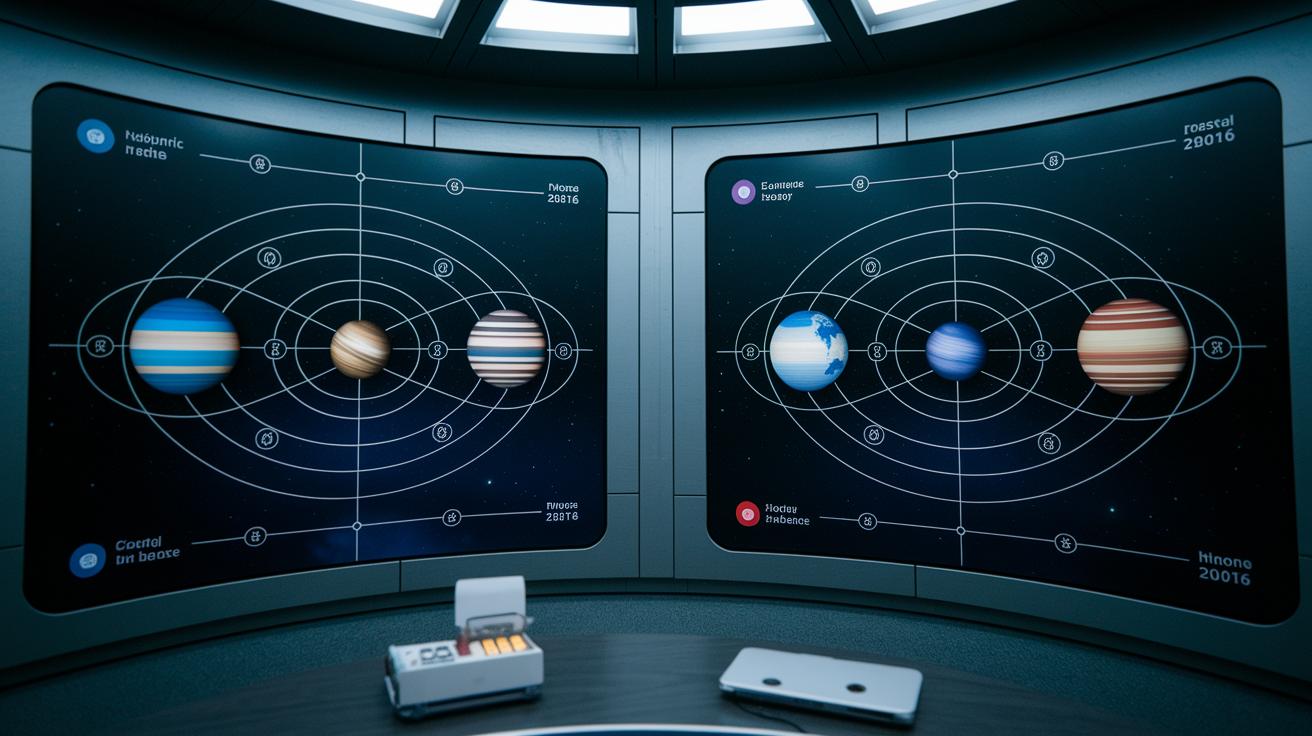
Long ago, people believed that Earth was the center of everything. Ptolemy thought the entire universe orbited around our planet. Then Copernicus changed the view by showing that the Sun sits at the center and that all the planets move around it. Discovering Uranus in 1781 and Neptune in 1846 made us rethink what a planet really is. These exciting moments pushed scientists to look at the sky with fresh eyes and create clearer ways to sort out the wonders up above.
In 2006, a lively debate shifted how we label these celestial bodies. The International Astronomical Union decided that Pluto did not meet all the rules to be a full planet. This choice set off many discussions, and it made us review the status of smaller worlds like Eris and Ceres. By calling Pluto a dwarf planet, scientists showed that having simple, clear rules is important. This new way of thinking brought along fresh insights into the way we understand our marvelous universe.
Exoplanet Classification and the Kepler System

The Kepler telescope has been exploring the cosmos since 2009. It watches distant stars and looks for tiny dips in their brightness when a planet slides in front, much like a secret signal from the universe. This clever method reveals a planet’s orbit and helps us spot new worlds adrift in space.
Scientists group exoplanets by a few easy clues. The size of a planet hints at what kind of world it might be. How fast and far a planet orbits its star adds even more detail to the cosmic picture. They also check a planet’s temperature and make-up to see if it could have liquid water. This special area, called the habitable zone, is that perfect spot around a star where conditions might just be right for life. Thanks to this approach, many Earth-size and smaller planets have been discovered, changing how we see our galaxy.
| Exoplanet Class | Radius Definition |
|---|---|
| Earth-size | About 1 Earth radius |
| Super-Earth | Between 1-2 Earth radii |
| Mini-Neptune | Approximately 2-4 Earth radii |
| Neptune-size | Approximately 4-6 Earth radii |
| Jupiter-size | Greater than 6 Earth radii |
Other cool methods build on what Kepler finds. Scientists watch for a gentle wobble in stars (called radial velocity) caused by nearby planets. They also notice brief bright flashes when a massive object passes in front of a far-off star, known as gravitational microlensing. And, even though it’s tricky, sometimes direct imaging captures actual pictures of these planets. All these techniques work together to show us a fuller, more magical view of the countless worlds scattered across our galaxy.
Advanced Methods in Planetary Classification
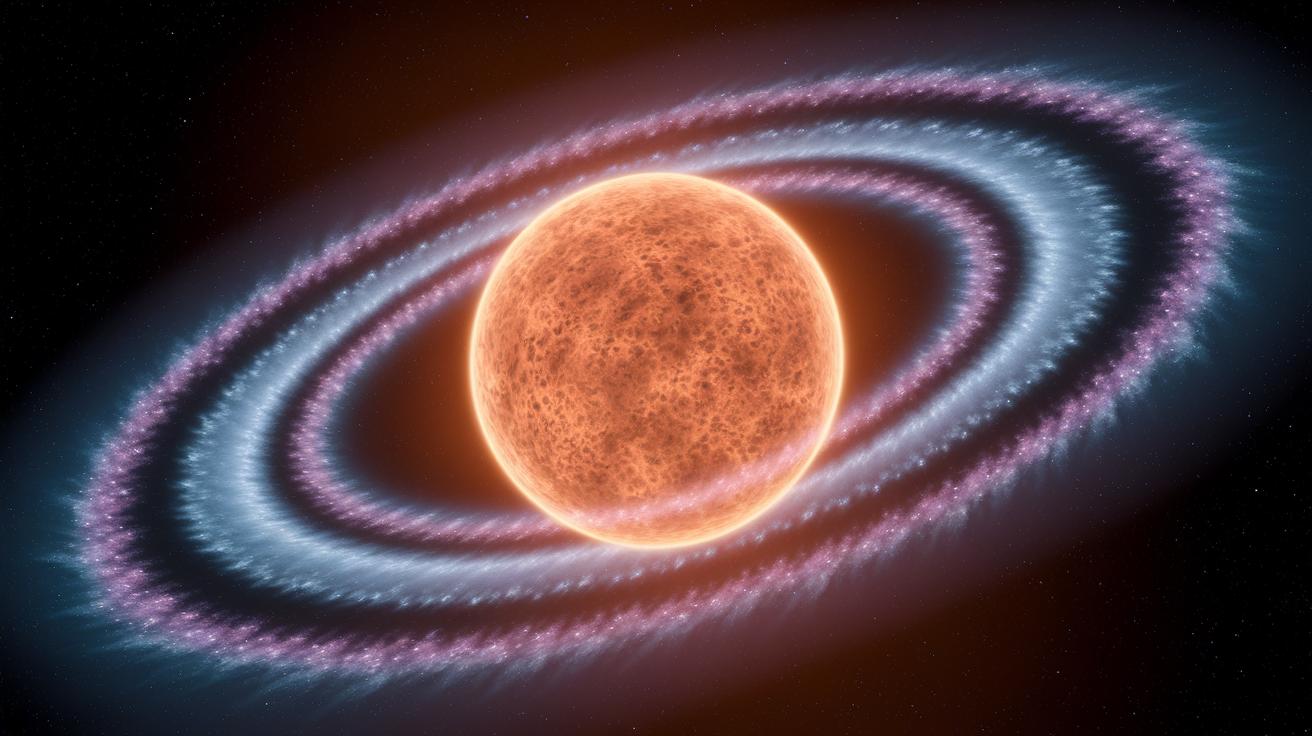
Planets begin their lives in a swirling disk of gas and dust, much like a magical dance in space. Scientists believe this is how worlds are born from a spinning cloud around a young star. They divide this disk into zones based on how far they are from the star and the mix of chemicals present. For instance, early computer models showed that the inner areas, filled with rocky bits, are very different from the outer zones where lighter, volatile materials gather. This simple ranking helps us see why planets end up with unique traits depending on where they form.
Modern computers have really changed the way we peek into planetary secrets. Researchers now use simulation models to build digital versions of planet formation. Imagine it as putting together a cosmic jigsaw puzzle where each piece stands for a part of physics. These models let scientists test how changes in mass and composition shape the final planet we see. Even if the process sounds tricky, breaking it down into clear steps makes everything more understandable.
Another cool method is spectral analysis. Telescopes like Hubble and JWST, along with space probes such as Voyager and Cassini, capture the light from distant planets. This light acts like a planet’s diary, sharing details about its atmosphere and surface. By combining telescope images with these light signatures, scientists can easily spot differences between planets. This clarity helps them draw better boundaries when classifying these wonderful worlds.
Educational Tools and Interactive Planetary Classification Models

One fun way to remember the order of the planets is by using a little memory trick. Many people learn the planet lineup with the phrase "My Very Educated Mother Just Served Us Noodles", which helps keep the order from the Sun clear in your mind. It’s a simple tool that opens the door to even deeper wonders of our solar system.
Digital simulations bring the whole solar neighborhood to life. They let you explore how planets travel in their orbits, showing both the inner and outer paths side by side. With easy-to-see maps and visuals, even tricky space ideas feel friendly and clear.
Kids can also learn a ton from helpful guides and comparison charts. These charts sort out rocky worlds from giant, gas-filled ones and even show where dwarf planets live out in the Kuiper belt and Oort cloud. They make the differences between these celestial objects simple to follow, just like a gentle journey through space.
Final Words
In the action, the post dives into the basics of planetary classification criteria and the scientific measures behind it. It explains the unique conditions needed for an object to be tagged as a planet, from mass thresholds to orbital clearing tests.
It also explores major planet types, the fascinating history of shifting definitions, and modern tools like the Kepler system. Every bit of discussion reinforces how planetary classification continues to illuminate our understanding of the cosmos. Things are looking brighter ahead.
FAQ
What is a planetary classification chart?
A planetary classification chart organizes planets by factors like mass, composition, and orbital traits. It helps us understand how scientists group celestial bodies based on their key physical properties.
How does Star Trek’s planet classification differ from scientific definitions, and is a class M planet real?
A Star Trek classification, with class M for Earth-like worlds, uses creative naming rather than measurable criteria. In science, planets are grouped by traits like mass and orbit, and no formal “class M” exists.
What are the eight planets in our solar system, and in what order?
The eight planets, ordered from the Sun outward, are Mercury, Venus, Earth, Mars, Jupiter, Saturn, Uranus, and Neptune. They form the familiar lineup based on their orbital positions.
What defines the classifications of planets as outlined by scientists?
Planets are defined by criteria such as orbiting the Sun, achieving a nearly spherical shape, and clearing their orbital path. This method distinguishes traditional planets from dwarf planets based on measurable characteristics.
How are exoplanets classified using modern techniques?
Exoplanets are classified by attributes like size, orbital path, surface temperature, and composition. Missions like Kepler group them into categories such as Earth-size, super-Earth, mini-Neptune, Neptune-size, and Jupiter-size.
What are terrestrial planets?
Terrestrial planets are rocky bodies with solid surfaces similar to Earth. They mostly reside in the inner regions of solar systems and are recognized for their distinct, rocky composition.
What does the term “planetary level” refer to?
Planetary level refers to a comparative scale based on a planet’s physical and orbital characteristics. It helps us gauge a planet’s complexity when compared to others within its cosmic neighborhood.
How do objects like Earth, Mercury, Moon, Sun, and Jupiter fit into planetary classification?
Earth, Mercury, and Jupiter are planets with unique characteristics, while the Moon is a natural satellite and the Sun is a star. Each plays a distinct role in our solar system’s overall celestial structure.