
Ever wonder if the sky might be setting up a private show just for you? On February 28, 2026, six planets will come together in a striking line right after sunset.
Imagine the planets aligning like a gentle cosmic dance, sharing their magic in a way that feels both special and easy to enjoy. This guide breaks down exactly when and where you can catch this stunning display.
Get ready for a night when the heavens gift you a clear, beautiful alignment, a moment that might just change the way you see the stars.
Step-by-Step Guide to Viewing the Planetary Alignment: Made Simple
Hey there, mark your calendar for February 28, 2026, because something magical is coming your way. That night, about an hour after sunset, six planets will gather in a charming parade as they glide across the sky. Some will be low near the horizon, while others climb higher, creating a beautiful, if not perfect, line.
Here’s how to catch this celestial show:
- Exact Date and Time: Look up the stars on February 28, 2026, roughly one hour after sunset.
- Where to Gaze: Turn your eyes to the western horizon where this planetary dance unfolds.
- What to See: First, spot Mercury and Venus low in the sky, and then watch as Jupiter, Mars, Uranus, and Neptune steadily rise.
- Best Sky Conditions: Pick a night that is clear and free of city lights to see everything clearly.
- Check for Obstacles: Find a spot without nearby trees, buildings, or anything that might block your magical view.
Before you head out, be sure to check the weather and pick a comfy dark spot. A red-lens flashlight can keep your eyes adjusted, and a warm jacket will make the evening even cozier as you enjoy one of the sky’s most delightful displays.
Understanding Planetary Alignment and Ecliptic Lines
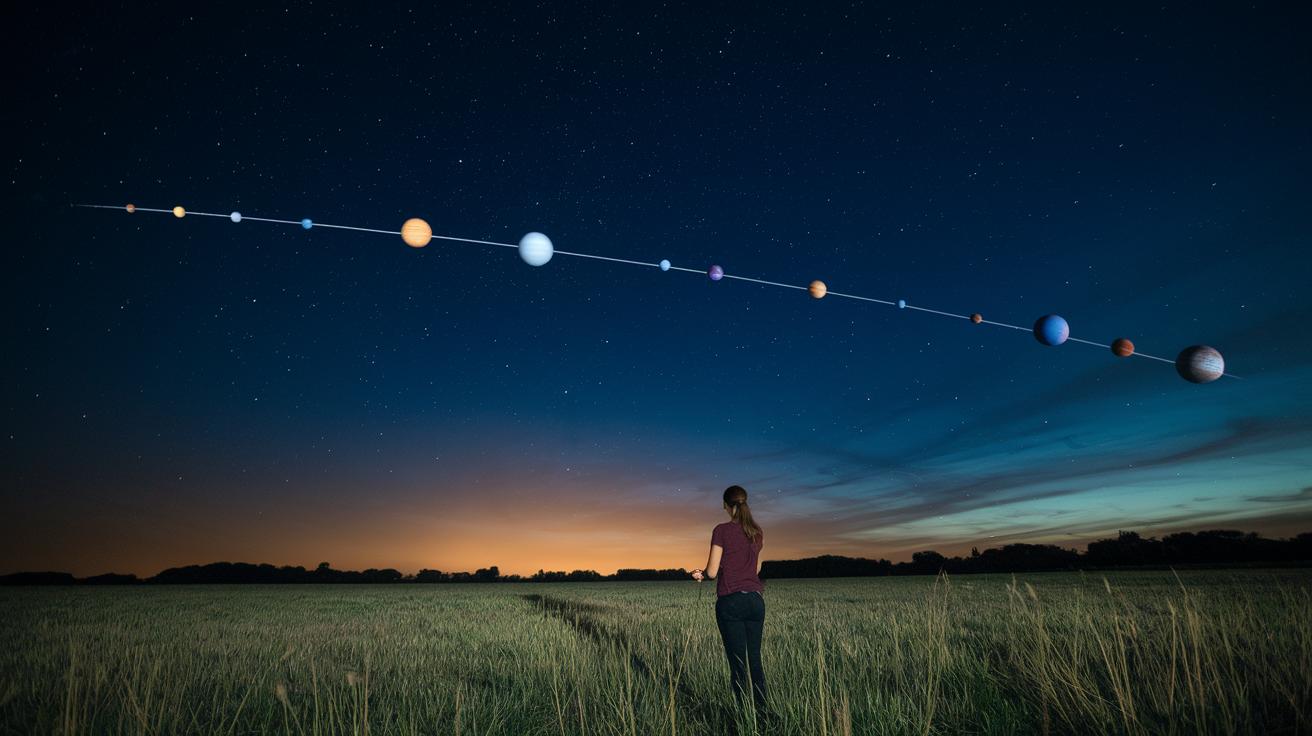
Planetary alignments, sometimes called planet parades, happen when several planets seem to gather on one side of the Sun, as seen from Earth. They aren't really lined up in a row; it's just our view that makes them appear close together along the ecliptic, which is the band where the Sun looks like it moves among the stars. Imagine looking down a winding road: the cars may be in different lanes, yet from far away, they look like they're following the same path. Kind of like how sparks trail from a firework, the planets seem to leave a glowing line in the sky.
Each planet travels on its own tilted orbit. So even when they hang out close to the ecliptic, their paths don't form a perfect straight line. Their slight tilts mean that while the planets appear aligned, they're really just a little off from each other. That's why even a seven-planet alignment, like the one expected on February 3, 2034, won't be a flawless line but a soft, graceful curve that shows the true, ever-changing dance of our solar system.
Selecting the Best Times and Locations for Planetary Alignment Viewing
Timing and location are the heart of truly enjoying a planetary alignment. In early March, the night sky offers clear signs for keen stargazers. Mercury dips below the horizon about an hour and a half after sunset, which marks the start of the show. Venus sparkles in the western evening, easy to spot against the darkening sky. Mars still shines brightly after its January peak, and Jupiter stands high above the familiar Orion. Uranus peeks just west of Jupiter but soon fades away. Since Saturn and Neptune aren’t visible during this time, picking the right moment and spot is key to catching every magical detail.
| Month/Date | Planet Visibility | Elevation | Ideal Conditions |
|---|---|---|---|
| March 1 | Mercury | Low | Early evening clarity |
| Early March | Venus | Low to mid | Bright western twilight |
| Early March | Mars & Jupiter | Mid to high | Dark skies away from city glare |
| Early March | Uranus (fading) | Mid | Elevated, clear area |
To really absorb the wonder of a planetary alignment, choose a spot far from city lights. Search for a place on higher ground where nothing hides the horizon. Make sure there are no trees or buildings to block even a tiny bit of the sky. A simple sky map can help you set up the perfect viewing point, so every beautiful detail of the celestial show comes into clear view.
Equipment and Safety Guidelines for Planetary Alignment Observation
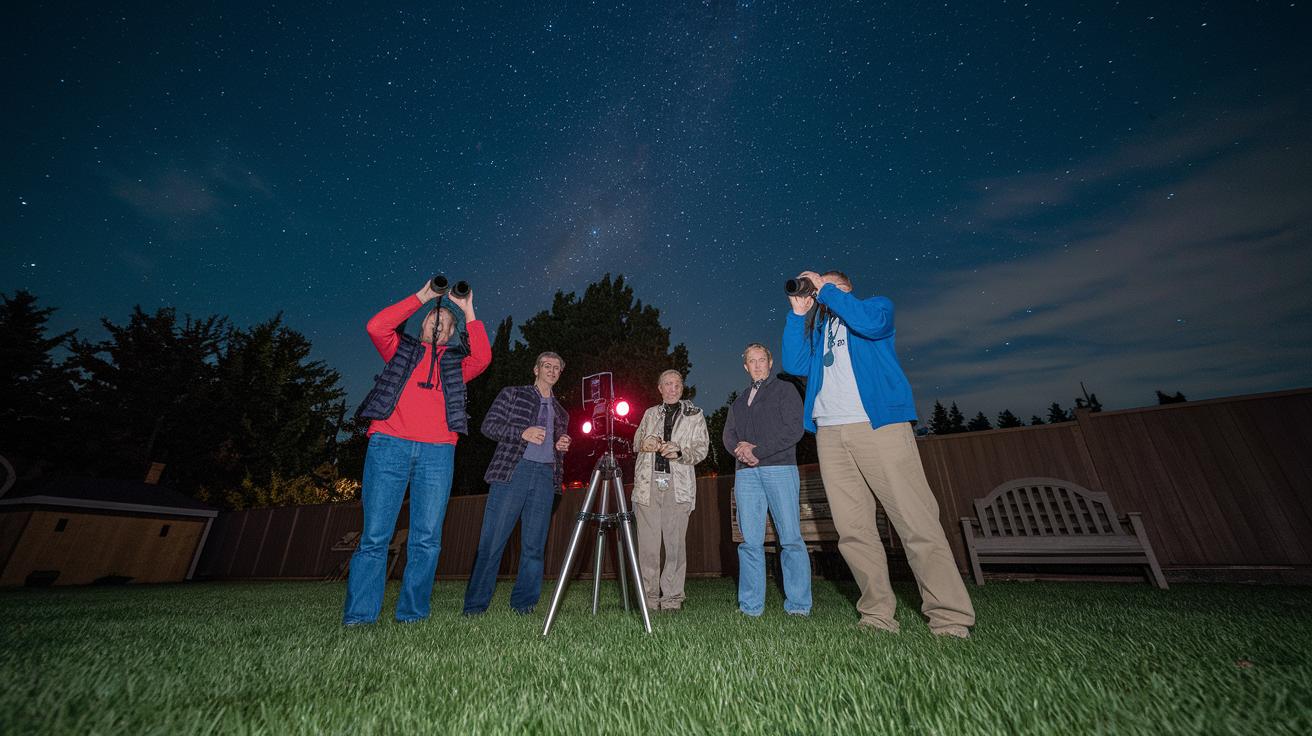
When you gaze at the stars, the right tools really elevate the experience. You might see four planets with just your eyes, but using binoculars brings out subtle details, like the soft glow of Uranus. A small refractor or Dobsonian telescope lets you explore Mars’ surface and even catch a glimpse of Jupiter’s moons. This gear turns a casual look at the sky into a detailed adventure with our cosmic neighbors. And don’t forget a red-lens flashlight, it gently lights up charts without messing with your dark-adapted eyes, keeping your night vision sharp for those magical moments.
Staying safe while you explore the night is just as important. Always check the weather first so you can avoid cloudy or foggy skies that might hide the stars. It’s smart to dress warmly too, as temperatures can drop quickly once darkness sets in. Let someone know where you’ll be watching the skies for an extra sense of security while you enjoy the cosmic show. With a little planning and care, you create the perfect setting to marvel at a planetary alignment safely and comfortably.
Digital Tools and Apps for Tracking Planetary Alignments

Today, many apps and online tools make exploring the night sky both fun and easy. Star Walk 2 lets you see where each planet is by showing their positions right on your horizon in real time. NASA’s streaming portals even bring live views of the global sky right into your home. You can also use interactive charts online that help you compare what you see in the sky with recorded positions. It’s like having a simple window into the vast cosmos.
Digital communities add to the fun by sharing weather-safe alerts and tips to avoid light interference. Many astronomy forums offer helpful advice so you can plan your stargazing perfectly. And if you want to remember upcoming planet alignments, you might try a cosmic calendar from this link: cosmic calendar. All these tools work together to make every celestial event a personal and interactive adventure.
Planning for Future Planetary Alignments
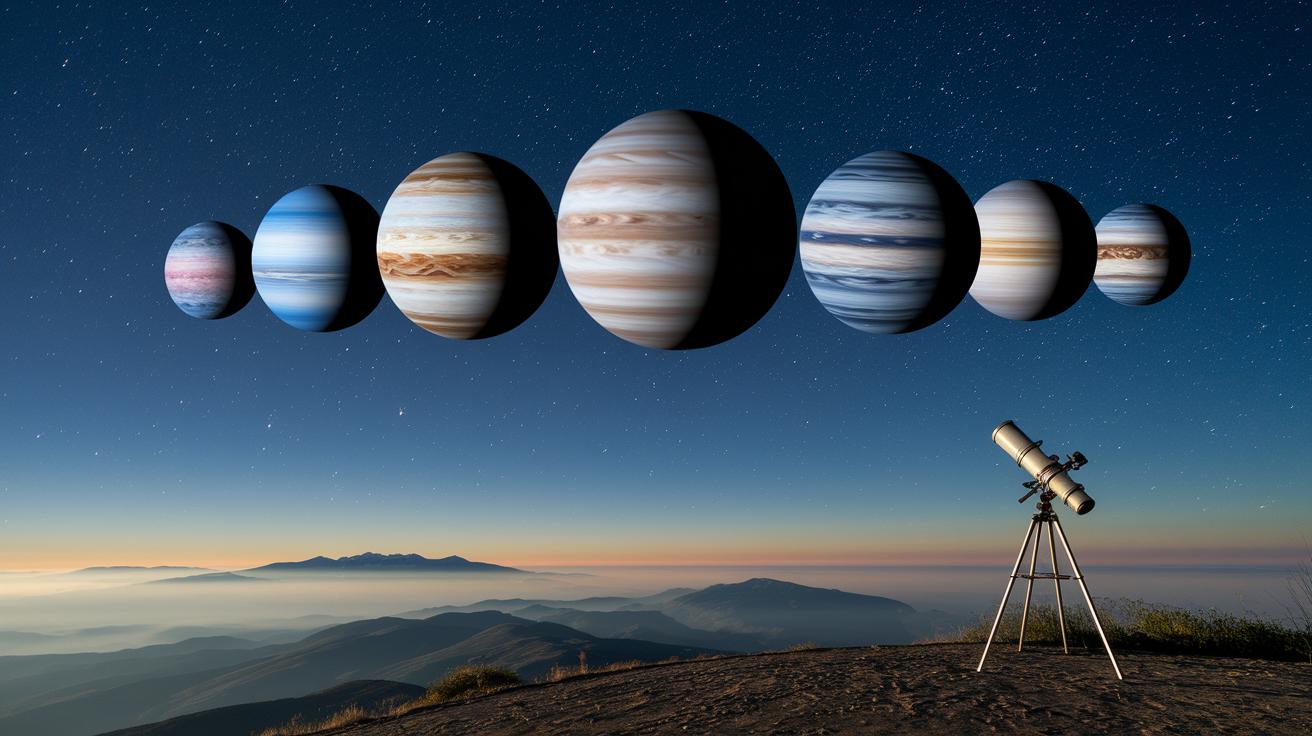
Our skies are set to put on a show with a seven-planet parade coming on February 3, 2034. This rare event offers a peek at our solar system's graceful dance. Big alignments like this happen every 15 to 20 years. Even ancient records from 947 CE and 1186 CE show that people have marveled at these wonders for a very long time. It feels like watching the heartbeat of the universe in motion.
To get ready for these cosmic events, start by looking at trusted astronomical calendars that show when planets will be near each other. Think of these almanacs like a roadmap that tells you when to look up. Regular checks on cycle reports and historical data can help you plan for both grand alignments and smaller celestial gatherings. This simple strategy makes it easy to schedule a stargazing night, invite friends over, and enjoy the awe of the night sky with plenty of time to wonder at our cosmic pulse.
Final Words
In the action, you discovered step-by-step instructions for tonight's celestial display and how to see the planetary alignment. The guide broke down key details like timing, directional placement, the order in which planets shine, and the right equipment to use. It also explored digital tools that help track our vast cosmic show and tips for planning future events. This clear, friendly approach brings cosmic insights right to you, lighting up your path with clarity and positive energy. Enjoy the stars and let them spark your inner light.
FAQ
Frequently Asked Questions
When was the last time all the planets aligned?
The last full alignment of all key planets occurred centuries ago. Notable events were recorded in 947 CE and 1186 CE, showing just how rare a complete planetary display can be.
When is the next planet alignment or is there one today?
The six-planet display is set for February 28, 2026, while a complete seven-planet event won’t happen until February 3, 2034. Check local guides as today’s events change with time.
What is the 2025 planetary alignment’s spiritual meaning and astrology interpretation?
The 2025 alignment signals a time of balance and renewal. Astrologically, it encourages reflection and re-centering, inviting us to tune in to our inner vibes during the celestial show.
Where should I watch the planet parade in 2025?
The planet parade in 2025 is best viewed from dark areas free from city lights. Look toward the western horizon during twilight to catch the gentle display of moving planets.
What does planetary alignment mean?
Planetary alignment means that planets appear grouped along the ecliptic from Earth’s view, creating a harmonious display that reflects the natural order of their orbits rather than a perfect straight line.
How often do the planets align?
Planets tend to form noticeable groupings roughly every 15–20 years. Smaller alignments may occur more frequently, underscoring the ever-changing dance of our solar system.
Where do I look to see a planetary alignment?
To see a planetary alignment, gaze toward the western horizon after sunset along the gentle arc of the ecliptic, where the planets seem to gather in the sky.
At what time can I see the planet alignment?
The best time to view a planetary alignment is about one hour after sunset when darkness falls, revealing the planets along their natural path in the sky.
How do I locate planets in the sky?
You can locate planets by using a simple sky map or a mobile app that highlights their positions along the ecliptic, making them easier to spot with your eyes or binoculars.
Do I need a telescope to see the planetary alignment?
A telescope isn’t necessary for viewing a planetary alignment since many planets are visible with the naked eye. However, binoculars can help if you want to see fainter objects like Uranus.