
Have you ever felt like the stars are sharing a little secret just for you? Your personal horoscope is like a cosmic puzzle that gives hints about who you really are and what you might become. In this guide, you'll see how the zodiac signs, planets, and houses come together like splashes of color to create a clear, vivid picture of you. Picture each piece as a gentle brushstroke on your unique celestial portrait. Get ready to discover your chart in a new way that brings the magic of the stars into your everyday life.
Essential Steps for Interpreting Your Custom Horoscope
Reading your custom horoscope is like fitting together a space puzzle. Every element – planets, zodiac signs, houses, and aspects – works together to reveal the unique story of who you are. For example, Saturn in Capricorn in the 7th House might show a reserved approach to partnerships, while Venus in Sagittarius in the 11th House suggests a friendly, open vibe in social settings. Your horoscope reflects your natural potential, but your choices help shape how these energies appear in your daily life.
- Start by gathering your birth details. Write down the exact date, time, and place of your birth – like "July 20, 1990 at 3:30 PM in New York" – to create a reliable cosmic map.
- Use a trusted tool to generate a detailed chart. This chart will show symbols for planets, houses, and aspects that guide your reading.
- Identify the four main components: planets, zodiac signs, houses, and aspects. For instance, the sign on the cusp, such as Capricorn on the 7th House, sets the overall tone, while the planets inside that house add a personal twist.
- Look at how each detail influences your chart. Notice if some placements suggest a quiet approach or if others hint at more social energy.
- Finally, mix these clues into one clear narrative. Think of it like blending different hues to paint a true portrait of yourself, crafted by the stars.
Celestial Reading Manual: Generating Your Custom Horoscope Chart
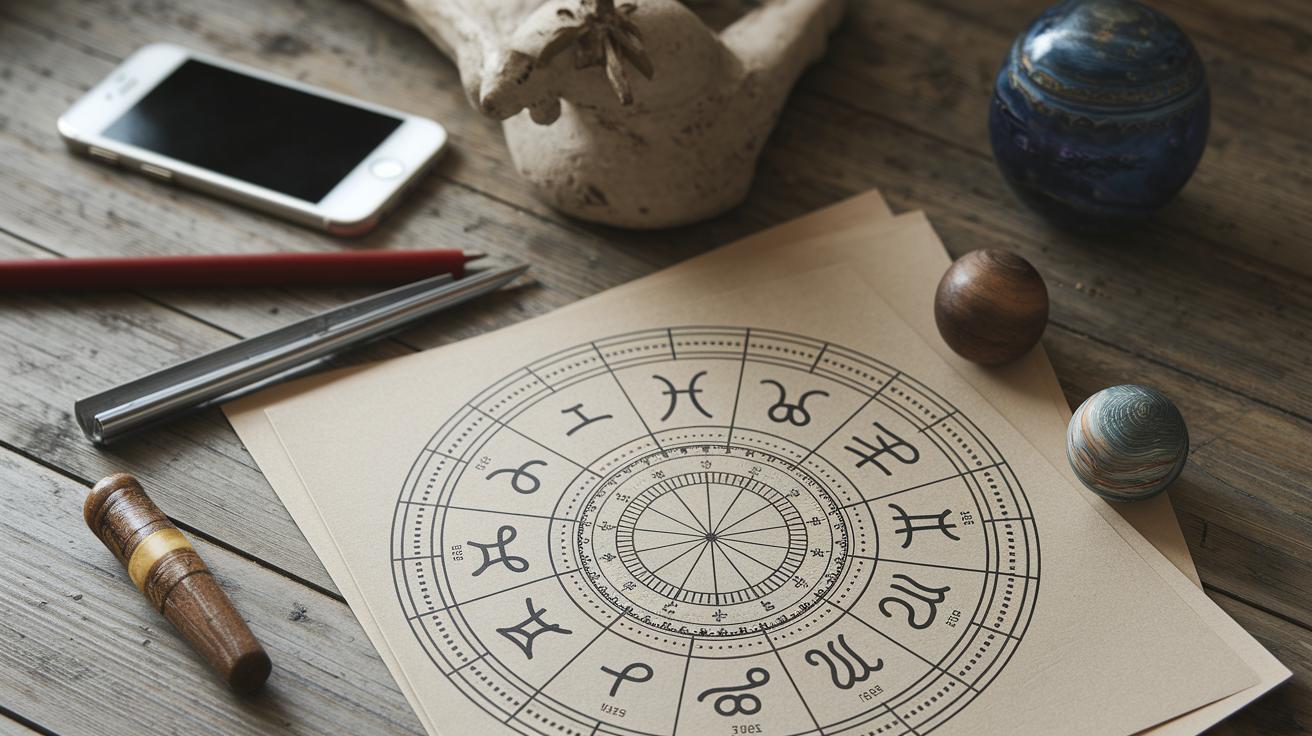
Start by gathering your birth details like your date, time, and place. For example, you might say July 20, 1990 at 3:30 PM in New York. Use these details in your preferred astrology tool to create your chart. This chart shows symbols for the Sun, the Moon, and other planets placed along the zodiac. It gives you a peek at how the stars were arranged the moment you were born.
Next, focus on two key parts of your chart: the Ascendant and the Midheaven. The Ascendant is like a gentle ray of morning light that shows how people first see you. And the Midheaven hints at your public persona and your dreams for the future.
- The Ascendant helps others form their first impression of you.
- The Midheaven offers clues about your public life and career goals.
Chart Construction Fundamentals for Custom Horoscope Interpretation
Think of your horoscope like a pie cut into 12 equal slices. Each slice, or house, shows a part of your life. For example, the first slice might reflect how you see yourself while the seventh slice can reveal your approach to partnerships. Start by looking at where your planets fall in these slices. If you spot Venus in Sagittarius in the 11th slice, it could mean you cherish friendly and social connections in your life.
Every planet holds its own special meaning. The Sun, Moon, Mercury, Venus, Mars, and the others all add their unique influence to your feelings and actions. Their positions in the zodiac and houses tell your story in simple, clear hints. Imagine Mercury in Gemini in the 3rd slice, this might be a clue that you love chatting and solving little puzzles in your everyday life.
A big part of reading your chart is understanding how zodiac signs connect with their ruling planets. The table below gives you a quick guide. For instance, Saturn rules Capricorn. So if you see Capricorn on the edge of your 7th slice, it might suggest you take a careful approach when it comes to partnerships.
| Zodiac Sign | Ruling Planet |
|---|---|
| Capricorn | Saturn |
| Sagittarius | Jupiter |
Now, put it all together by matching the signs, planets, and houses. Let them blend like colors in a painting to reveal a clear picture of the path ahead.
Planetary Influence Primer in Your Custom Horoscope
Imagine your horoscope as a treasure map full of cosmic clues. Each planet sits in a sign and a house, and they all tell a part of your story. The Sun lights up your heart and dreams. For example, if your Sun is in Leo and in the 1st House, you might come off as warm and full of life. The Moon, on the other hand, shows the way you feel deep down and how you find comfort.
Mercury is all about how you talk and solve everyday puzzles. If it hangs out in a chatty sign like Gemini, you may be quick-thinking and love a good conversation. Venus takes care of your values, beauty, and close bonds. When Venus is in a steady sign like Taurus in the 2nd House, it often points to a love for all things cozy and a strong sense of what feels just right.
Mars gives you energy and helps you take action. Its spot in your chart can reveal whether you jump into things with a burst of speed or take a slow, steady approach when problems pop up. Jupiter sprinkles a little optimism around, helping you see the bright side and inviting growth into your life.
Saturn teaches us through lessons and sometimes hard-earned limits, slowly guiding you to grow up and become wiser. Then you have Uranus, Neptune, and Pluto. Uranus is the spark of surprise and being unique. Neptune encourages dreams and trusting that gentle inner voice, while Pluto brings powerful changes that help you transform.
For a bit more help on reading these hints, check out the links for birth chart symbols and interpreting planetary influences in your birth chart.
Astro Sign Guidance: Analyzing Zodiac Placements in Your Custom Horoscope
Planets carry their own energy that shines through the signs they occupy. Instead of just listing traits, think of each placement as a unique piece working with both simple groups and basic elements to shape how it shows up. For example, Mars in Aries explodes with a clear urge to start something new, giving off a spark of energy that fires up action.
We sort signs into groups called modalities: cardinal, fixed, and mutable. Cardinal signs jumpstart activity, fixed ones keep the momentum steady, and mutable signs adjust as needed. Elements, like fire, earth, air, and water, add their own twist. Fire lights up passion, earth keeps things solid, air brings fresh, imaginative ideas, and water cares for softer feelings. Consider Mercury in Gemini. It's more than just flexible; it carries a breezy curiosity that invites you to explore new thoughts.
Your Ascendant provides extra clues about who you are. It blends your inner self with the way you appear to others, creating first impressions that matter. Imagine an Aries Ascendant showing off a bold and direct vibe, a burst of confidence that makes you stand out.
- Planet positions shape how your energy shows up.
- Modalities reveal if your energy starts, holds steady, or adapts.
- Elements give that energy a special taste.
- The Ascendant links your inner truth with the image you share with the world.
House System Clarification in Custom Horoscope Reading
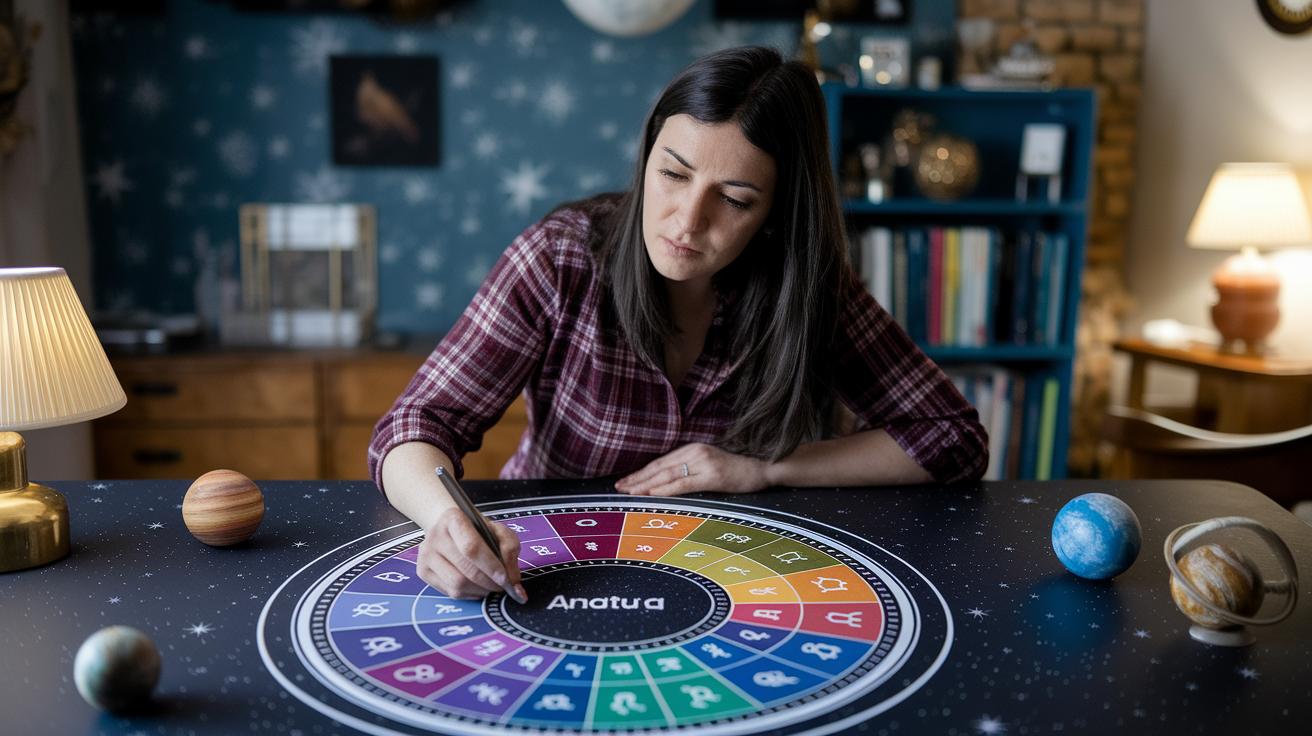
The houses split your chart into 12 sections, but they're much more than that. They reveal how the energy of planets mixes with the vibe of the zodiac signs. For example, if a planet is in a house ruled by a different sign than the one on the cusp, its energy can take on a new, unexpected feel. Think about it: When Venus rules the second house but hangs out in the fifth, its soft energy might suddenly burst into creative flair.
Digging a bit deeper, you'll notice that each house has a ruler, a planet that sets the mood for that area of life. When a planet shows up in a house it doesn’t usually rule, its energy can mix in surprising ways. For instance, imagine the typically quiet Saturn in the house of partnerships. If it makes a strong connection with a planet from a creative house, it can stir up challenges in a unique way.
| House Number | Nuance | Example |
|---|---|---|
| 2 | Resources with a Creative Twist | If a planet from a creative sign lights up the second house, money and resources may flow in artistic ways. |
| 7 | Partnerships with Extra Layers | Saturn in the seventh house, teamed up with a strong influence from another planet, can signal unexpected shifts in relationships. |
| 10 | Career and Public Image | A planet energizing the tenth house, even if it isn’t the house ruler, might change your career ambitions with a burst of energy. |
Aspect Pattern Exploration: Understanding Planetary Relationships in Your Custom Horoscope
When you look at your personal horoscope, you'll notice that the planets seem to have secret conversations all their own. These chats happen through angles, or aspects, that connect different parts of your chart. There are five main types: conjunction (0°), sextile (60°), square (90°), trine (120°), and opposition (180°). Each one tells its own story. For example, a conjunction is when two planets meet, doubling their energy. It's like watching two bright fireworks burst together, lighting up your cosmic sky.
Sextiles and trines, on the other hand, are gentle helpers. They let planets work together smoothly, almost like one soft hand lifting another. For instance, Mars sextile Jupiter shows that Mars' fiery push is eased by Jupiter's warm, generous influence. But then squares and oppositions come along, stirring a bit of tension. A square might bring moments of challenge, while an opposition creates a push-pull dance between opposing forces.
Another cool idea to keep in mind is the difference between applying and separating aspects. An applying aspect is like a wave that's growing stronger, building up its energy. In contrast, a separating aspect is like the fading glow of sunset, hinting that its energy is slowly drifting away.
Here are a few key points to remember:
| Aspect Angle | Meaning |
|---|---|
| 0° (Conjunction) | Doubling of energy |
| 60° (Sextile) | Easy, smooth support |
| 90° (Square) | Challenges and tension |
| 120° (Trine) | Flowing, harmonious energy |
| 180° (Opposition) | Push-pull dynamic |
Think of your chart as a lively dialogue between these planetary friends. Maybe you'll notice Mars in conjunction with Jupiter, sparking bold and intense energy. Or perhaps a Mars sextile with Jupiter softens that drive, turning it into gentle support. Try this little cosmic exercise: find one conjunction and one sextile in your chart. Reflect on how these aspects make you feel in different parts of your life. Have you ever noticed moments when energy builds up like a powerful wave, or times when it calms down like the soft glow of twilight?
Natal Map Evaluation: Analytical Insights Beyond the Basics

Think of your chart as more than a tick-box exercise. It’s a gentle guide that shows how planets whisper to one another in subtle ways. Rather than simply listing your planets, signs, houses, and aspects, notice how they interact and shape your life story.
For instance, a rough Saturn-Sun mix might stand out against a warm Moon-Venus bond, highlighting the dance between strict self-discipline and soft emotional sensitivity. Imagine someone with a strong Saturn-Mercury connection who struggles with getting their thoughts across; when a caring Moon lightens the mood, it shows that even tough spots can lead to growth.
Look for little signs that reveal deeper patterns. Consider checking out:
- Complex connections: Notice if many planets line up to concentrate energy in one area.
- Key spots: See how houses like the 10th or 4th glow with multiple planets, hinting at strong themes in career or home life.
- Balancing acts: Observe how the mix, or even the missing elements, of elemental energy shapes your personal story.
| Indicator | Advanced Insight |
|---|---|
| Multiple Conjunctions | Shows a strong focus in one life area, which can intensify both strengths and challenges |
| Oppositions | Highlights inner tension that, when balanced with other aspects, sparks growth |
Try comparing two or more charts if you can, or reflect on themes that keep popping up in your life. This approach goes beyond the basics and offers a richer, more personal insight into the cosmic forces shaping you.
Final Words
In the action, we explored reading your custom horoscope by breaking down how every chart piece fits together. We touched on the basics, planet positions, house details, sign placements, and the energy exchanged in aspects. Each step paints a picture of potential and personal insight.
Take this guidance to help you feel aligned with life's rhythm and unlock clarity on how to interpret your custom horoscope. Enjoy the magic that every star brings to your day.
FAQ
How to read a birth chart PDF
Reading a birth chart PDF means viewing key elements like planetary positions, zodiac signs, house placements, and aspects. Use a PDF viewer to zoom in for a clear look at your astrological layout.
How to read a birth chart in minutes
Reading your birth chart quickly involves spotting the sun, moon, and rising signs first, then glancing at house placements. This gives you a brief look at the main components of your cosmic profile.
How to read a birth chart for beginners
For beginners, reading a birth chart means starting with basic points like the sun, moon, and rising signs, then noticing planetary positions in houses. Simple guides and calculators can help make it easy.
How to read your birth chart
To read your birth chart, focus on major points such as the sun, moon, and rising signs, then check where the other planets fall in zodiac signs and houses. This reveals key aspects of your personality.
Free birth chart analysis
A free birth chart analysis offers a snapshot of your cosmic blueprint. It reviews your sun, moon, and rising signs along with planetary placements, helping you understand the influences shaping your life.
Birth chart calculator
A birth chart calculator uses your birth details to create your astrological chart. It shows the positions of your sun, moon, and planets in different zodiac signs and houses for a visual astrological summary.
How to read birth chart houses
Reading birth chart houses means checking the twelve life areas marked on your chart. Look at the house cusps and note any planets present to see how energies affect aspects like relationships, career, and personal growth.
How to read astrocartography chart
Reading an astrocartography chart involves mapping your birth chart onto a world map. It highlights lines where planetary energies are strong, which can suggest places that might feel supportive or energizing for you.
How do I read my own horoscope?
Reading your own horoscope starts by identifying your sun, moon, and rising signs. Then, review the planetary placements and aspects to gain insights into the current influences affecting your life.
How to interpret a horoscope chart?
Interpreting a horoscope chart means combining the positions of planets, zodiac signs, houses, and aspects. This synthesis creates a snapshot of your inner traits and tendencies, offering useful guidance for self-reflection.
What are the rarest signs in the birth chart?
The rarest signs in a birth chart refer to less common planetary placements in certain zodiac signs. These unusual spots can give you distinctive energies that stand out from more typical placements.
Can ChatGPT analyze a birth chart?
ChatGPT can offer general astrological guidance based on common principles and chart elements. However, personal, detailed analysis usually benefits from human insight and specialized astrological tools.