
Ever wonder if the quiet night sky is sharing a secret just for you? Your transit chart is like a cosmic map that shows how today's moving planets meet the positions set when you were born.
Imagine the gentle shimmer of starlight guiding you, sometimes it’s a quick flash from Mercury hinting at a sudden change, or a slow, steady shift from a distant planet lighting a new path. This personal guide lets you see the magic in the small moments as well as the big shifts in your life.
Stick with us as we explore how these starry signals might gently touch your everyday routine.
Astrology Transit Chart: An Overview of Planetary Movements and Their Effects
An astrology transit chart shows you how moving planets make angles with the planets in your natal chart, which is like your personal star map from the day you were born. When a traveling planet lines up with one from your birth chart, its energy lights up a special area in your life. Sometimes, these cosmic meet-ups happen quickly, like Mercury speeding by in just a day, while other times, especially with outer planets, the effects stretch out over years. This ongoing process can bring new chances for growth or hint at shifts in your daily routine. For instance, when Jupiter makes a transit, it might fill your days with optimism and open up exciting opportunities, whereas a Saturn transit can signal that it's time to buckle down and work hard.
Each transit affects a different area of your chart called houses. Think of houses as parts of your life like relationships, work, or emotions. The Moon also plays its part with its phases. A New Moon often feels like a fresh start, and a Full Moon can bring emotional clarity. Meanwhile, Jupiter and Saturn create longer cycles that offer a wider view of your evolving life story. Imagine looking at your transit chart and spotting a Venus transit, you might feel that your love life is about to brighten with some warm, positive vibes. Every transit offers you a snapshot of the cosmic shifts that gently steer both daily moments and major life changes.
Reading Planetary Placements in Your Astrology Transit Chart

When you check your transit chart, start by finding out which zodiac sign each planet is in and which house they occupy. Think of it like a simple map that shows you where the planets sit compared to your birth chart. This helps you see which parts of your life are getting extra cosmic attention. It's like watching the gentle shimmer of starlight as planets move and make important angles with your natal chart.
Next, take a look at the angles between the planets in your current transit and those in your birth chart. These angles reveal the kind of cosmic energy swirling around you. For example, if you see a 90-degree angle, a square, it might mean you’re about to face some tense but growth-filled moments. Tools such as an ephemeris or a digital sky chart can help you pin down the exact dates, degrees, and duration of these events. They guide you along your cosmic journey with gentle clarity.
Below is a quick reference of the major aspects and what they mean:
| Aspect | Angle | Meaning |
|---|---|---|
| Conjunction | 0° | Intensified energy |
| Sextile | 60° | Opportunity and flow |
| Square | 90° | Tension and challenge |
| Trine | 120° | Ease and harmony |
| Opposition | 180° | Balancing and awareness |
| Quincunx | 150° | Adjustment needed |
| Semi-sextile | 30° | Subtle shifts |
Pay attention to these angles, and you’ll start to get a clear picture of how the transits shape your path. Each aspect is like a little cosmic sign, guiding you with reminders and opportunities as the planets dance around in the sky. Have you ever felt the pull of these celestial currents? Enjoy discovering the unique story your star map has to tell.
Distinguishing Short-term and Long-term Transits in Your Astrology Transit Chart
Planets such as Mercury, Venus, and Mars dash across the sky and briefly shape our everyday experiences. These fast movers remind us of quick moments, think of Mercury retrograde, which shows up a few times a year and can throw communication or tech into a mild jumble. It’s like hitting a pause button, gently asking you to slow down and reassess.
On the other hand, the outer planets take their sweet time. Jupiter hangs around a sign for about 12 years, filling your world with optimism and fresh opportunities for growth. Saturn, with its serious vibe, spends roughly 29 years in a sign, nudging you to learn lessons in responsibility and structure. Even slower are Uranus, Neptune, and Pluto. They journey through a sign over 84, 165, and 248 years respectively, weaving long-lasting, generational patterns into our lives.
Understanding these differences can help you notice which cosmic events are just passing sparks and which ones burn with long-term energy. It’s all about tuning in to the universe’s natural rhythm and aligning your expectations with its gentle flow.
Interpreting Key Events in Your Astrology Transit Chart: Mercury Retrograde, Lunar Phases, Venus Transits

Mercury Retrograde
Mercury goes in reverse three to four times every year. This time offers a chance to review how you communicate and use your gadgets. For instance, if you face a phone mix-up, it might be a nudge to double-check your plans, much like re-reading a draft after a small glitch.
Moon Phases
The phases of the moon set the beat for your emotions. Earlier, we noted that the New Moon is a time for setting fresh intentions, while the Full Moon helps clear out old feelings. Now we've brought these ideas together for a smoother flow. Picture a crisp night when the bright light of the Full Moon suddenly sparks clarity in your heart.
Venus Transits
Venus now joins our main planetary guide to shine a light on how you see relationships and creative sparks. It ties directly into your birth chart, showing shifts in your dreams and connections. Imagine an artist inspired by the gentle glow of an evening sky as warmth and charm fill their world.
Creating Your Astrology Transit Chart with Celestial Transit Calculators
Have you ever wanted to see the planets in action? Online transit tools show you the dance of the stars with just a few clicks. Using a celestial transit calculator feels like opening a window into the cosmic control panel of your life. It combines your birth details with today’s planetary positions, mapping out exact angles and timings. It’s a little like watching your very own mini cosmic show on your screen.
When you use a free celestial transit tool, you get more than just positions. You also see visual details like house divisions, aspect overlays, and clear timelines. Think of it as a modern star map that updates itself with every shift in cosmic energy. Each feature gently points out which parts of your life might feel a soft pull or a bright spark from planetary motion.
Here’s how you can create your own transit chart:
- Enter your birth date, time, and place.
- Pick a target date for your transit analysis.
- Choose your house system, like Placidus or Equal.
- Generate your chart with planetary glyphs and aspect lines.
- Check out the printed ephemeris or digital data panel.
Using these online tools makes tracking planetary events simple and fun. It gives you a hands-on way to see how cosmic vibes might sway your daily decisions, bringing the mysteries of the cosmos right to your fingertips.
Case Studies: Applying Your Astrology Transit Chart in Real-life Scenarios
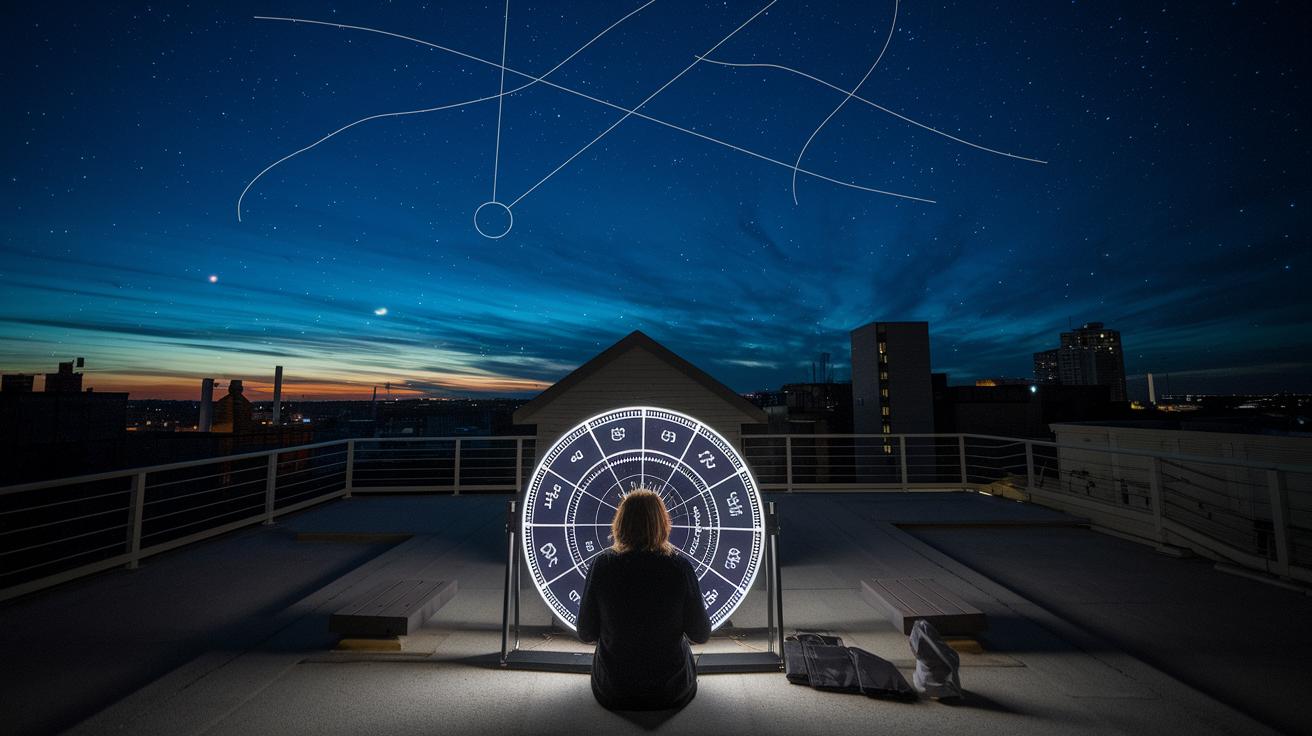
Imagine you see Mercury near your natal Sun, which is like the position of the Sun when you were born. One person noticed this and found that a big project got delayed by several weeks. Communication with coworkers kept running into mistakes. Instead of seeing it as a setback, they took it as the universe saying, "Take a breath and review your plans." They used this time to rethink their approach and clear up any mixed messages. It felt like the cosmos hit pause, giving them a moment to reflect and make improvements.
Another story shows what happened when Venus moved through the 7th house, a part of your chart that deals with close relationships. During this time, personal connections seemed brighter and warmer, with a big milestone appearing in one relationship. At the same time, a Jupiter return boosted their career confidence and opened up new job chances. The mix of these transits made it clear that good communication and mutual support built both personal and professional success.
Key takeaways include:
| Transit | Effect |
|---|---|
| Mercury | Gives a chance to pause, check details, and refine plans. |
| Venus | Adds warmth to relationships and helps you see beauty in connections. |
These real-life examples show that transit charts can be powerful tools. They guide us to look inside and celebrate changes. By noticing these celestial signals, we can make smart changes that lead to lasting benefits. Have you ever paused to re-check your plans when things felt a bit off? Sometimes, the stars just help us see things in a new light.
Advanced Transit Analysis: Outer Planet Cycles in Your Astrology Transit Chart
Today’s smart transit tools do more than just count days. They help us see how long planetary cycles shape big changes for whole generations.
Jupiter and Saturn Cycles
Jupiter takes 12 years to make its journey. Its path isn’t only about growth and luck, it can bring a fresh wave of hope to entire groups. On the other hand, Saturn moves slowly over 29 years, urging us to take responsibility and act with steady ambition. New forecasting tech picks up on the tiny moments when Jupiter and Saturn meet. This mix can point to times when a burst of shared opportunity comes with important lessons in sticking with it. Picture this: the software shows a new phase of growth, and soon communities are starting fresh projects while building solid foundations.
Uranus, Neptune, and Pluto Transits
Uranus spends 84 years on its path, sparking unexpected changes that spread across generations. It stirs up new ideas that can challenge the way things have always been done. Neptune journeys around for about 165 years, casting a soft, shifting glow that mixes our cultural dreams with everyday reality. Its influence sometimes makes it tricky to tell what’s real and what’s just a wish. Then there’s Pluto, slowly moving for 248 years while reshaping our shared values over time. Modern orbit forecast tools help us notice these gentle shifts, highlighting when our deep-set attitudes might be ready to change. Imagine the software hinting at a quiet cultural trend that gathers strength and eventually reshapes what people believe.
Final Words
In the action of exploring planetary shifts, we uncovered how an astrology transit chart guides daily vibes and long-term growth. We broke down reading planetary placements, understanding fast and slow transits, and spotting key events like Mercury retrograde and lunar phases. We even mapped out steps to create your own cosmic chart and shared real-life case studies that show its power. All these insights help paint a clear picture of how celestial patterns can light your way. Embrace the energy ahead and let this chart pave your path with optimism.
FAQ
What does a free transit chart with interpretation show?
The free transit chart with interpretation shows current planetary alignments against your birth chart, helping you see how planetary energy might influence your moods, decisions, and opportunities in everyday life.
How does a transit chart calculator, like the Astro Seek tool, work?
The transit chart calculator works by using your birth details and a chosen date to create a snapshot of planetary positions. It clearly maps aspects and house placements, making cosmic timing easier to understand.
What is the impact of current planetary transits?
The current transits spotlight both fast-moving influences, like those of Mercury and Venus, and slower outer-planet cycles that signal shifts in personal energy, emotional tone, and long-term growth patterns.
How can I get a free Vedic transit chart with interpretation?
The free Vedic transit chart provides insights using traditional methods, displaying current planetary positions and aspects in a way that makes ancient wisdom accessible and relatable to today’s experiences.