
Have you ever thought about why the planets seem to move as if they were dancing? Long ago, people noticed that gravity gently guides these bright orbs along smooth, oval paths. Early stargazers like Kepler and Newton found that tiny changes in speed and distance make a gentle, steady rhythm in the sky.
This article is all about how careful watching and some simple math can reveal the hidden balance that makes our solar system so special. Ready to see how these clear ideas light up the beauty of our cosmic home?
Planetary Motion Sparks Awe in Celestial Science

Planets spin around our sun because of gravity. A long time ago, careful sky-watchers like Tycho Brahe collected detailed observations even before telescopes existed. Later on, Johannes Kepler discovered that planets follow oval paths with the sun at one of the special focus points. This means they sometimes travel faster and sometimes slower depending on where they are in their orbit. Isaac Newton then added his own ideas by showing that gravity gets weaker when objects are farther apart.
These ideas join together to show us how the planets gracefully dance in space. By mixing careful observations with simple math, scientists can now predict where each planet will be at any given time.
Key points include:
- Planets travel in oval paths with the sun in a special spot
- They speed up and slow down during their journey
- Their travel time relates to how far they are from the sun
- Gravity weakens as the space between objects grows
All of these points help us see how a delicate balance keeps planets in their orbits. Even small shifts in distance can change gravity enough to affect their motion. This blend of old observations and clear math still sparks wonder and curiosity in both scientists and anyone who looks up at the starry sky.
Kepler’s Three Laws in Planetary Motion

Kepler discovered that planets don’t move in perfect circles. They follow gentle, oval paths called ellipses. In his first law, the sun sits off-center at one special point called a focus. This new idea shifted our view from perfect circles to these beautiful, subtle curves, thanks to careful folks like Brahe who gathered loads of detailed data.
The second law is just as intriguing. Picture a line joining a planet to the sun. This line sweeps out the same area in the same amount of time every time. So, when a planet is close to the sun, it speeds up, and when it’s farther away, it slows down. It’s a bit like a swing that moves fast at the bottom and gently at the top.
Kepler’s third law ties how long a planet takes to go around the sun with how far it is from the sun. In simple terms, if you square the time it takes for one full orbit, that number is linked to the cube of the distance. Written as T² ∝ a³, this neat equation not only revealed a cosmic connection but also paved the way for later discoveries by Newton.
| Law Name | Statement | Formula |
|---|---|---|
| First Law | Planets travel in oval shapes with the sun at one special point. | Ellipse |
| Second Law | A line from a planet to the sun sweeps out equal areas in equal times. | Equal Areas |
| Third Law | The square of the orbit time is linked to the cube of the distance. | T² ∝ a³ |
We see these ideas in action every day. For instance, Earth speeds up when it’s closer to the sun and slows down when it’s farther away. You might also notice changes in a planet’s travel time during its orbit. And by using T² ∝ a³, we can compare how different planets move around our star.
Newtonian Mechanics in Planetary Motion

Newton proved that gravity controls how everything in the sky moves. His famous formula, F = G·m₁·m₂/r², tells us that the pull between two objects gets weaker as they get farther apart. This simple idea explains why moons circle their planets and why planets orbit the sun. By comparing how the moon falls toward Earth with how objects drop near the ground, scientists confirmed that gravity fades with distance, just like the gentle dimming of starlight far from its source.
Here’s how Newton linked his ideas to the motion of orbiting bodies:
- Start with the formula F = G·m₁·m₂/r² to find the gravitational pull between two masses.
- Match that force with the circular motion force, F = m·v²/r, needed to keep an object in orbit.
- Solve the equations to figure out the orbital speed or the path the object follows.
- Apply these steps to different systems to predict how they will orbit.
For instance, when you compare the Earth-Moon system with the Earth-Sun system, the much greater separation between Earth and the sun means a slower orbital speed. This shows how mass and distance work hand in hand to create the graceful dance of the planets.
Mathematical Equations for Planetary Motion Calculations

Planets dance in space following simple math that can reveal their cosmic rhythms. Each of these formulas shows us a different beat in that celestial dance.
T = 2π·√(a³/GM)
This equation tells us the orbital period, T, or how long it takes a planet to complete one full loop around its star. Here, a is the semimajor axis, which means the average distance from the star, G is the constant that measures gravity’s pull, and M is the mass of the central star. Think of it as the cosmic pulse that sets the pace of a planet’s journey.
v = √[GM(2/r – 1/a)]
This next formula shows us the orbital speed, v, at any spot in the orbit. In this case, r is the current distance of the planet from its star. As the planet moves, its speed changes, as if it’s speeding up or slowing down to the rhythm of the universe.
L = m·√[GMa(1–e²)]
Here, we find the angular momentum, L, which is like the sway or twirl of the planet as it spins in its orbit. The m represents the planet’s own mass and e, the eccentricity, tells us how stretched out the orbit is. Even when the orbit shifts shape, the angular momentum stays true to its cosmic course.
Key variables in these equations include:
- G: gravitational constant (6.67×10⁻¹¹ N·m²/kg²)
- M: mass of the central body (in kilograms)
- a: semimajor axis, or the average distance of the orbit (in meters or astronomical units)
- e: eccentricity, a number that shows how oval the orbit is
- r: the planet’s current distance from the star (in meters)
- m: mass of the orbiting planet (in kilograms)
For example, if we look at Earth, we can say a is about 1 AU (roughly 1.496×10¹¹ meters), G is 6.67×10⁻¹¹, and M is around 1.989×10³⁰ kg. Plug these into the first equation, and you’ll see that T comes out close to one year, echoing our familiar 365-day orbit.
Isn’t it amazing how such clear math can capture the magic of our wandering planets?
Geometry of Elliptical Orbits in Planetary Motion

An ellipse is a lovely, simple shape that paints the backdrop of our cosmic dance. It’s defined by its longest distance (the semimajor axis) and its shortest width (the semiminor axis). The eccentricity, which we calculate using e = √(1–b²/a²), tells us just how stretched out the ellipse is. When e is 0, the orbit is a neat circle. As e grows, the shape elongates, and this change affects a planet’s journey around its star. At perihelion, when the planet is closest to its star, it zips along quickly. At aphelion, the farthest point, it takes its time and slows down. This graceful dance happens because of a neat cosmic rule known as the conservation of angular momentum.
Picture a drawing of an ellipse with two special points called foci. One of these points cradles the star, while the other stands quietly apart. Imagine drawing lines from the star to the path of the planet; their lengths change as the planet moves, which in turn changes how fast it goes. It’s like watching a swing: it speeds up as it swings close, then slows down at the peak. Have you ever felt that rush as a swing picks up momentum? That’s the magic of a planet’s orbit in action.
| Distance | Speed | Angular Momentum |
|---|---|---|
| Perihelion (closest to the star) | Higher | Constant |
| Aphelion (farthest from the star) | Lower | Constant |
Perturbations in Planetary Motion Dynamics
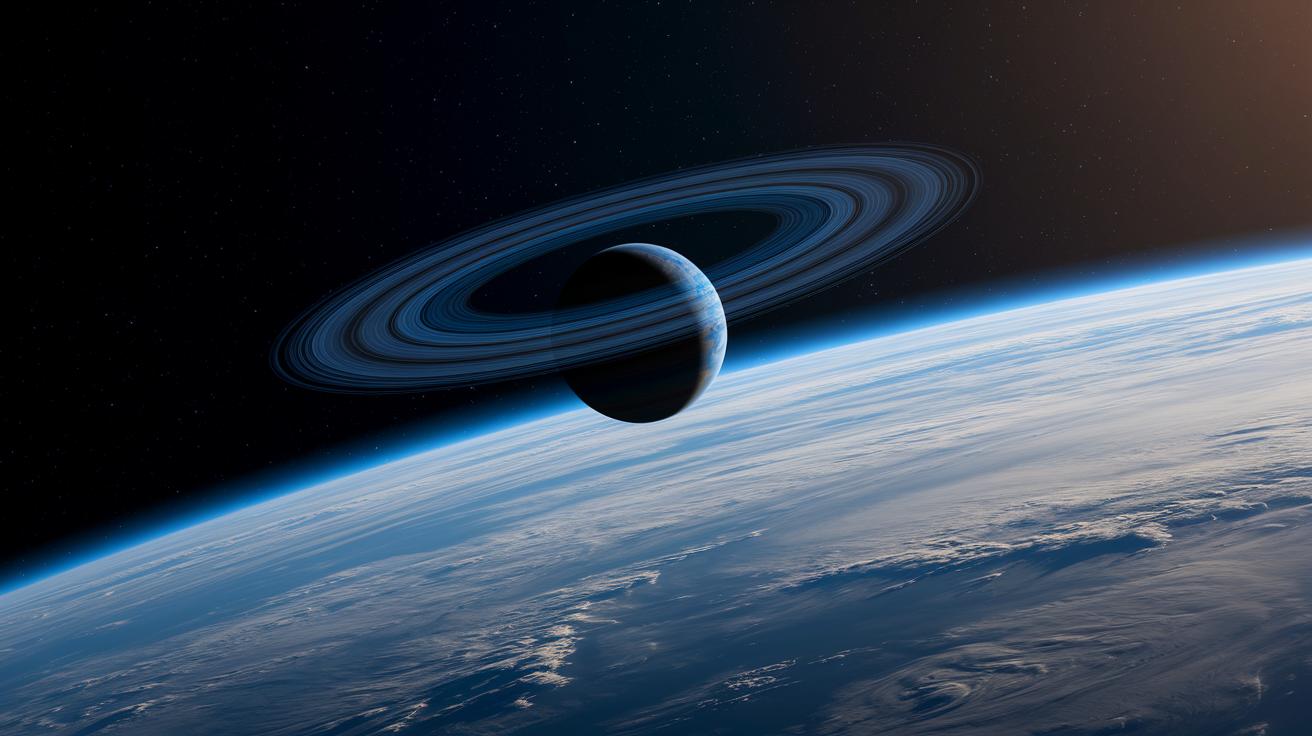
Planets don’t follow a perfectly smooth oval path. The gentle tug from other stars and planets shifts their orbits just a little bit, making their routes less predictable. Even the smallest push can slowly change their path over time. As planets, moons, and asteroids move along, they add extra twists to the beautiful cosmic dance. This reminds us that space is a lively scene full of moving forces.
Here are a few easy examples of these cosmic nudges:
- Jupiter and Saturn: They tug on each other so their paths shift ever so slightly.
- Earth and the Moon: Their pull on each other causes small, calming oscillations.
- The Asteroid Belt: Many small bodies pull on each other, creating little gaps and bends.
There’s also something called the three-body problem. When a third object joins in, its gravity makes the whole system very sensitive to where each object starts. This extra layer of push and pull makes predicting their paths much harder.
Even though scientists have modern models to predict these moves, nature still loves to surprise us. Researchers keep adjusting their ideas by including these tiny shifts. It shows us that the universe, with its ever-changing energy and subtle pushes, has a special kind of unpredictable charm.
Historical Evolution of Planetary Motion Theory

We have seen our understanding of the planets change a lot over time. Back in the 2nd century AD, Ptolemy believed that Earth was the center of the universe. He used little looping circles called epicycles to explain how the planets moved in the sky. His ideas were creative for their day, but as time passed, new thoughts emerged that changed everything.
Then in 1543, Copernicus flipped the view by placing the sun at the center instead of Earth. This sun-centered, or heliocentric, model offered a clearer and more down-to-earth picture of our cosmic home.
Between 1609 and 1619, Kepler took advantage of the careful observations made by Brahe. He discovered that planets follow oval, or elliptical, paths rather than perfect circles. Plus, their speeds change as they get closer to or farther from the sun. Incredible, right?
Finally, in 1687, Newton wrapped it all up in his famous work, Principia. His ideas tied the pull of gravity directly to the movement of the planets, giving these earlier observations a strong mathematical backbone.
| Date | Contributor | Key Contribution |
|---|---|---|
| 2nd century AD | Ptolemy | Used Earth as the center with epicycles explaining planetary movement |
| 1543 | Copernicus | Introduced the heliocentric model, placing the sun at the center |
| 1609-1619 | Kepler | Showed that planets move in elliptical orbits with varying speeds |
| 1687 | Newton | Linked gravity to planetary motion, unifying previous ideas with math |
Computational Models of Planetary Motion

Ever wondered how we track the dance of planets across the sky? Today, computer models help us do just that. Using simple math and clever methods, we can predict how planets, moons, and even whole star clusters move under gravity.
The process is like following a cosmic recipe. First, we set the stage by giving each object a starting spot, a speed, and a mass. Then we pick a method, perhaps the Runge-Kutta 4th order, a favorite among many or even the Euler method, to update these positions and speeds in small steps. After that, we work out the pull of gravity between every pair of objects using the idea that force weakens with the square of the distance. And then, we repeat the process, step by step, until our cosmic scene unfolds as planned.
Here’s a little Python example to show how it works with two bodies:
import numpy as np

def compute_force(pos1, pos2, mass1, mass2, G=6.67e-11):
    r_vec = pos2 - pos1
    r_mag = np.linalg.norm(r_vec)
    force = G * mass1 * mass2 / r_mag**2
    return force * (r_vec / r_mag)

# Example values for a two-body system
pos1 = np.array([0.0, 0.0])
pos2 = np.array([1.0, 0.0])
mass1 = 1.989e30
mass2 = 5.972e24

force = compute_force(pos1, pos2, mass1, mass2)
print("Gravitational Force:", force)
This snippet captures the basics of computing gravity between two bodies. Just like a friendly guide on a starry night, it helps point the way through the universe's grand mechanisms.
Final Words
In the action of exploring the mechanics behind planetary motion, we looked at fundamental orbits, Kepler’s laws, Newton’s gravitational insights, and even modern simulation techniques. Each section painted a clear picture, from elliptical paths and speed variations to the mathematical formulas that quantify these cosmic beats. It’s a neat blend of history, physics, and hands-on calculations that brings clarity to how planets move. Embrace these insights and let the rhythm of planetary motion fill your day with uplifting energy.
FAQ
What is the planetary motion formula?
The planetary motion formula describes how a planet’s orbital period relates to its distance from the sun using equations like T = 2π√(a³/GM), which helps calculate the path of orbiting bodies.
What does a Kepler’s law of planetary motion PDF contain?
The Kepler’s law of planetary motion PDF contains detailed explanations and mathematical expressions of the three laws, making it a practical resource for understanding elliptical orbits and orbital speeds.
What is Kepler’s third law of planetary motion?
The Kepler’s third law of planetary motion explains that the square of a planet’s orbital period is proportional to the cube of its orbit’s semimajor axis, linking time and distance in space.
What is Kepler’s first law of planetary motion?
The Kepler’s first law of planetary motion states that planets follow elliptical orbits with the sun at one focus, revealing the true shape of planetary paths in our solar system.
What is planetary motion in physics?
The planetary motion in physics describes the movement of planets around the sun under the force of gravity, following predictable paths and varying speeds based on their positions.
What are Kepler’s laws of planetary motion?
The Kepler’s laws of planetary motion include three main rules: planets orbit in ellipses with the sun at a focus, sweep equal areas in equal times, and have orbital periods related to their distances.
What does the second law of planetary motion state?
The second law of planetary motion states that a line from the planet to the sun sweeps equal areas in equal times, meaning a planet moves faster when it is closer to the sun.
What are Kepler’s 3 Laws of planetary motion worksheet answers?
The Kepler’s 3 Laws of planetary motion worksheet answers provide clear solutions and explanations of each law, helping learners understand elliptical orbits, area speeds, and period-distance relationships.
What is meant by planetary motion?
The term planetary motion refers to the movement of planets as they orbit the sun, governed by gravity and illustrated by key mathematical laws and principles of physics.
What are three types of planetary motion?
The three types of planetary motion include orbiting around the sun, rotating on a planet’s axis, and precessing, which is the slow wobble in the orientation of the rotational axis.
Who was known for planetary motion?
The scientist known for planetary motion is Kepler, whose careful study of the planets led to the formulation of the laws that describe the elliptical paths of celestial bodies.
What is an example of planetary motion?
An example of planetary motion is Earth’s revolution around the sun in an elliptical orbit, where its speed increases when near the sun and decreases when farther away.