
Have you ever taken a peek at your natal chart and felt a little confused? At first, it might seem like a jumbled puzzle. But every planet and house offers hints about what makes you truly unique. When you see where your Sun, Moon, and other planets are, you're really learning about both your inner self and how you show up in the world. Step by step, you begin to connect these twinkling clues together naturally. Let this guide help you understand your cosmic map with ease, like chatting with a friend under the gentle shimmer of starlight.
Fundamentals of Reading Your Natal Chart
Start by taking a good look at where your planets sit along the zodiac. See where your Sun, Moon, and the other planets are located. For example, if your Sun is in Leo, it hints at a lively, creative side of you. Think of this as your first step in uncovering your cosmic personality.
Next, notice the twelve houses that divide the sky. Each house shows a different slice of your life. The First House might reveal how you see yourself, and the Tenth House could shine a light on your career and public role. Imagine these houses as little cosmic sections containing clues about your unique experiences.
Then, take a moment to explore the angles between the planets. Look for interactions like conjunctions (when planets are 0° apart), oppositions (180° apart), and squares (a 90° angle). For instance, a close conjunction between Mercury and Venus in Gemini might mean your thoughts and feelings flow together nicely. Recognizing these aspects lets you see how the planetary energies mix or sometimes clash.
Also, start with your Ascendant, the rising sign that shows the face you present to the world. It sets the tone for your entire chart. Once you’ve found your Ascendant, move on to the placements of the Sun and Moon to capture both your outer vibe and your inner sensitivity.
Finally, work through each part step by step, as if you're drawing your own star map. This straightforward method helps you piece together your natal chart and discover the basic cosmic clues that shape who you truly are.
Understanding Houses in Your Natal Chart

The twelve houses in your natal chart divide the sky into segments, each shining a light on a different aspect of your life. The 1st House, for example, tells how you see yourself and the vibe you give off, kind of like a natural mirror reflecting who you are at first glance.
The 4th House is all about home and family. Imagine it as the rich soil where your personal growth takes root. The 7th House focuses on the connections you form with others, illuminating the traits that come out in close relationships. Then there’s the 10th House, which highlights your career and public life, revealing your ambitions and the legacy you wish to build.
The 6th House covers your daily routines and health, offering gentle guidance on caring for your physical self. Each house has a edge, called a cusp, marking a zodiac boundary at the moment you were born. This means the locations of the planets in these houses can hint at life events or traits unique to you.
By linking each house to its life area, you begin to see a larger picture of how your choices might flow with the cosmic energy. For more details, check out Birth chart houses.
Reading Zodiac Signs in the Natal Chart
Zodiac signs are like markers that show where your Sun, Moon, and planets were when you took your first breath. They offer little clues about who you are by highlighting your personality, feelings, and actions. For instance, if your Sun glows in Leo, you might shine with warmth and creativity. And if your Moon settles in Cancer, you could be deeply sensitive and caring.
Imagine standing under a twinkling sky, gazing at your very own cosmic map. Your zodiac placements act as gentle signposts, guiding you to see your natural talents and habits. Each sign belongs to a group, fire, earth, air, or water, that colors your energy. Fire signs burst with bold passion while earth signs lend a calm, steady vibe.
Every sign also has a unique quality that adds an extra sparkle. A mutable sign brings flexibility and a readiness to change, whereas a cardinal sign sparks leadership and initiative. And a fixed sign helps you stay true to your core. Notice how these energies blend to shape a distinct cosmic story just for you.
Picture reading your chart as if you were assembling a vibrant, starry puzzle, where every sign paints its own unique hue in the story of you.
Interpreting Planetary Placements & Aspects in a Natal Chart

When you read your natal chart, first check where each planet sits in the zodiac. The Sun shows who you truly are, while the Moon digs into your inner needs. Mercury hints at your way of talking, and Venus gives clues about what matters to you. Mars, on the other hand, shows your energy and drive. Each planet adds a piece to the puzzle of your life.
Now take a look at the angles the planets make with each other. These angles, called aspects, tell us if their energies work smoothly together or if there’s a bit of a tug-of-war. When two planets line up closely, that’s a conjunction and their qualities mix. A 60° angle, called a sextile, means the connection is gentle and helpful. A 90° square might feel challenging but pushes you to grow. A 120° trine flows easily, while a 180° opposition shows areas that might need a good bit of balance.
Imagine this: the Sun sits at 15° Taurus and the Moon at 17° Virgo in a sextile. This tells a story of a smooth bond between your true self and your emotions, hinting that you might balance confidence with sensitivity. Such details help point to strengths you can build on or challenges you might face.
It can also be helpful to note how other planets interact. For example, looking at the connection between Mercury and Venus might reveal how your thoughts mix with your values. Observing aspects with Mars can show where your drive supports or clashes with other parts of your chart. Write each placement and angle down like you’re piecing together a puzzle of your life. This approach helps you understand how the sky speaks to you and builds your unique cosmic blueprint.
For more details, check out Interpreting planetary influences in your birth chart.
Identifying Ascendant and Chart Ruler in Your Natal Chart
The Ascendant, or rising sign, sits at the very start of your natal chart and marks the beginning of your first house. It shows the face you share with the world and is set by the exact time you were born. Think of it as a little doorway revealing your initial vibe when you step into new experiences.
Your Chart Ruler is the planet that rules over your rising sign. For example, if your Ascendant falls in Aries, Mars becomes your Chart Ruler. This planet guides you through challenges and adds a unique flavor to your personality, affecting how you communicate and push forward every day.
Knowing both your Ascendant and its ruler helps you see how you naturally handle interactions and life's surprises. It can be really useful to jot these details down in your astrology journal. That way, you might spot the links between your outward behavior and your inner path, giving you a clearer picture of your journey.
Synthesizing Your Natal Chart Components
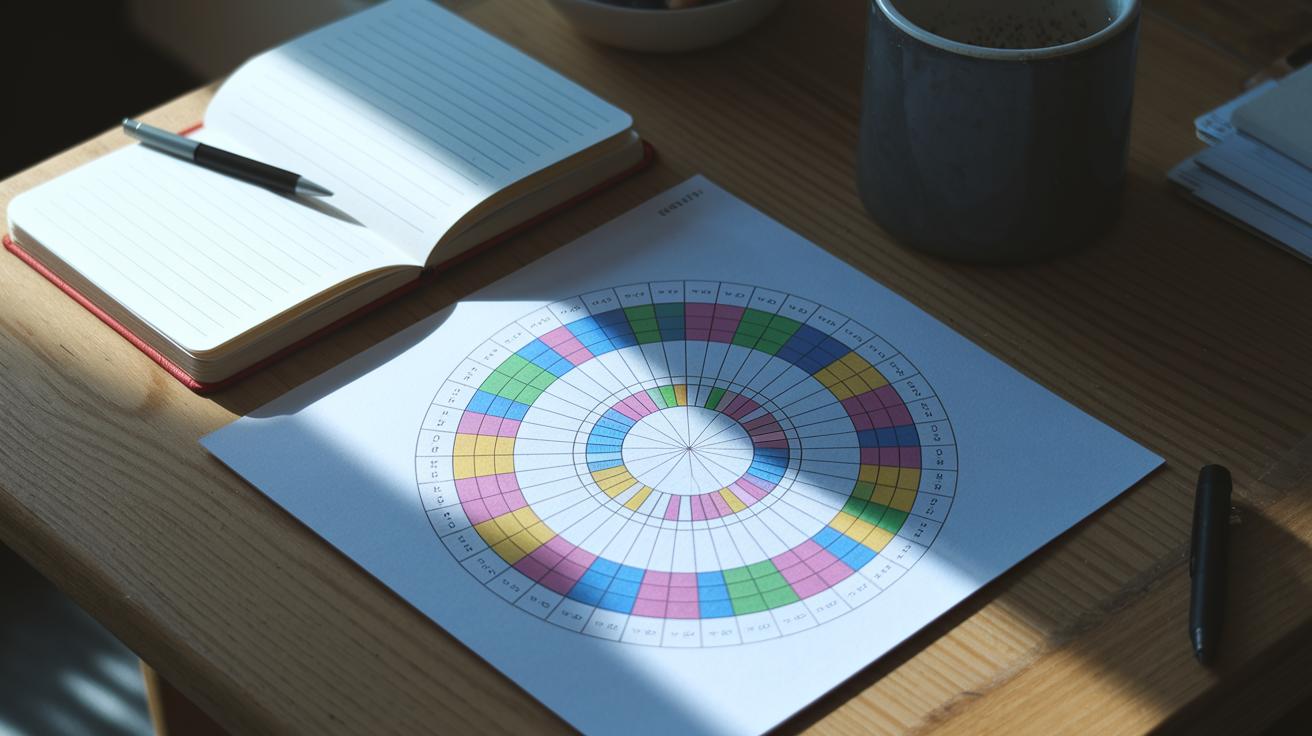
When you bring together all the pieces in your natal chart, you get a clear glimpse of your unique cosmic design. Begin by laying out your house placements to see which aspects of your life shine the brightest. Then, look at the zodiac energies for each section, like imagining a Sun in Leo in the Fifth House with Jupiter nearby, which can suggest a playful, creative spark in matters of love or art.
Here's a simple guide to the major components:
- House positions: See where each planet sits among the twelve areas of life.
- Zodiac sign colors: Notice how every sign adds its own distinctive vibe.
- Planetary aspects: Identify key angles, like conjunctions or squares, to understand if they ease your path or pose challenges.
- The Ascendant and Chart Ruler: These parts show how you naturally express yourself and point to your life’s direction.
jot these details down in a journal. As you record your placements, watch for patterns, maybe repeated themes in your purpose, relationships, or career will start to emerge. When that happens, you’re closer to grasping your one-of-a-kind cosmic signature.
Think of it like putting together a puzzle. By gathering your house placements, sign energies, and aspects, you build a complete picture of your inner self. This clear view not only highlights your strengths but also hints at the challenges you may face on your journey.
Practical Tools and Tips for Reading Your Natal Chart
Start by trying out free online calculators that use ephemeris data to build your chart wheel. These neat tools let you see your birth map clearly without any fuss. Picture a soft, color-coded grid where planets seem to whisper secrets to one another. It’s like piecing together a fun, cosmic puzzle that brings your celestial angles to life.
Next, you might use a simple spreadsheet to track your transits and progressions over time. This helps you watch the sky shift and see how patterns like solar returns or retrogrades shape your life. And don’t forget about an astrology journal. Write down key dates and the feelings you experience during different cycles. Over time, this diary becomes a collection of cosmic clues that makes each phase easier to understand.
Here are some key tips to keep in mind:
- Try free online calculators to generate your chart wheel.
- Use visual guides like color-coded grids to spot planetary interactions.
- Track transits with a spreadsheet and record your experiences in a dedicated journal.
Final Words
In the action, we explored reading house placements, zodiac signs, and planetary aspects while highlighting the Ascendant and Chart Ruler. Each step adds a clear piece to the colorful puzzle of your natal blueprint. With practical tools and straightforward tips, you've learned to see how these elements connect to shape everyday life. Keep trusting your intuition, and let this guide help you master how to read a natal chart for empowered, daily cosmic clarity. Embrace your inner light and shine bright.